
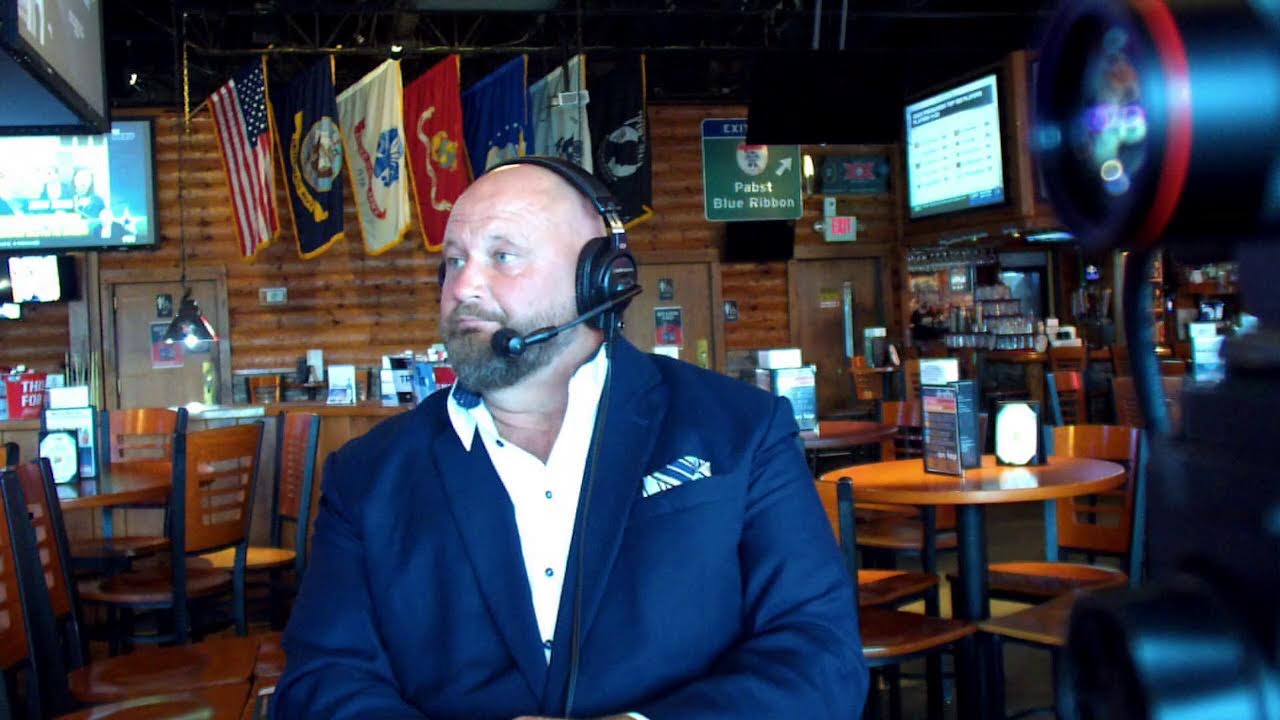
Whether we like it or not, he's the self-proclaimed governor of mid-Missouri, and he's the host of TTBS, the podcast. Since we can't shut him the hell up, here's Tom Bradley. Thank you, Nikki Garman. I always appreciate that. And I am a governor of mid-Missouri. I think more people need to appreciate that and know that on a regular basis. There's so many things I want to get into. We're live from Truman's Bar and Grill, and I want to talk about Truman's and what they're doing with more live music again this weekend. I'll get to that in a second, but I can't go a step further without welcoming to the show, in place of co-host Ellis Bennis, we've got a, I don't want to say temporary, I don't want to jeopardize who you are and what you do. Use the word guest. A guest co-host. Yeah. I like that. If I need any other help during the podcast in using what words I should use, I'm going to turn to you. I'll get the source. You've already done a hell of a job. Aaron Rose, ladies and gentlemen, the Rose of Realty. Thank you. And I looked at your, at your WW this morning, and it was like, what is it, go? Goarose.com. Goarose.com. That's, that's not bad. That's fairly short. Do you encourage people to go a rose? That's how you get to me. Yeah, absolutely. It's a good job. Thank you for being here today. This is really, really some level of kismet. Do you believe in faith? Of cour...
Whether we like it or not, he's the self-proclaimed governor of mid-Missouri, and he's the host of TTBS, the podcast. Since we can't shut him the hell up, here's Tom Bradley. Thank you, Nikki Garman. I always appreciate that. And I am a governor of mid-Missouri. I think more people need to appreciate that and know that on a regular basis. There's so many things I want to get into. We're live from Truman's Bar and Grill, and I want to talk about Truman's and what they're doing with more live music again this weekend. I'll get to that in a second, but I can't go a step further without welcoming to the show, in place of co-host Ellis Bennis, we've got a, I don't want to say temporary, I don't want to jeopardize who you are and what you do. Use the word guest. A guest co-host. Yeah. I like that. If I need any other help during the podcast in using what words I should use, I'm going to turn to you. I'll get the source. You've already done a hell of a job. Aaron Rose, ladies and gentlemen, the Rose of Realty. Thank you. And I looked at your, at your WW this morning, and it was like, what is it, go? Goarose.com. Goarose.com. That's, that's not bad. That's fairly short. Do you encourage people to go a rose? That's how you get to me. Yeah, absolutely. It's a good job. Thank you for being here today. This is really, really some level of kismet. Do you believe in faith? Of course. Are you a religious man? Yes, very. I love this because I'm a spiritual man, but I'm not a religious man. I keep bringing religious people on the show and it works for me a lot. So thank you. So, so you think that maybe something, a greater power had a hand in you being here today for this particular episode of TTBS, the podcast. I'd like to think so, especially since our guest and I are 30 year friends, you know, I had no idea. I had no idea. Which is funny. You and I were having breakfast on, was it Monday morning? Yup. Is it just me or does Monday seem like a long time ago already? It is. The week went slow. So, so on Monday morning we're having breakfast and I found out and did you know at that point who the guest was? I did, because I saw your, your Facebook post. Our guest this morning walked in, had no idea that you were the guest. I know. Guest co-host. Sorry, we haven't even introduced him yet, but man, I'm so excited about it. That is, that is really, really something. I got a good man hug and I have his cologne on me now. That's more than I really needed to know at this time. I will mention who it's going to be and we'll get to him in just a few moments. It is someone who was on my radio show a number of times and we've become, I want to say that we are spiritual brothers, I think on a number of levels. Julian Jackman is going to be on the show. I want to find out how he is with this kind of an introduction. A Como citizen, a former Missouri Department of Corrections resident. Member. Member. Yeah. A founder of peace, P E A C E people embracing another choice effectively. And what he's, what he's doing is trying to reach out to kids that need the help and help them to not follow the same road that he took accurate. It's a weird road because he's now at a place where he, he's one of several friends that I have that are, that are cons. These guys were inmates in the prison system and now they're like close, very personal friends of mine. And I never thought I'd be in that kind of a position. He never thought he'd be friends with some weirdo like me. It works out. Julian Jackman is our, is our guest this morning. We'll get to him in just a few moments. Uh, Truman's, I mentioned Truman's a few minutes ago and you are here at Truman's. This is the cathedral of bar and grill in the United States. And they've got more live music again coming up this weekend on Saturday, seven till 10, no cover, no reservations, table for four here at Truman's. No reservations, no cover. They're going to have Heart Creek Ramblers live. They said one of Columbia's favorites. I'm not sure if I know Heart Creek Ramblers. Do you have any idea who, who the negative, I'm unaware at this time, something tells me they get around after all. They are ramblers. Am I right about that? You have to earn the word rambler. Yes, you do. So congratulations on Truman's and the Heart Creek Ramblers getting together. They'll be here live on Saturday. Tell me a little bit about you and real estate before we move forward. Because do you always, do you always look at this good this time of the morning? God, you look good. Thank you to my tailor. I'm a tubby guy, so I just can't grab anything off the rack. Do you have a, do you have a tailor? Of course. Who's your tailor? Uh, his name's John the tailor. He's from Bangkok, Thailand. He's here two times a year and I buy all my clothes out of a four by four swatch. And then you've got to be kidding me. He's been here for, I've been 13 plus years. What about your shirt? Everything I have is custom. Does he, he custom makes the shirt? I've got a weird frame. So yes, he makes it look good. You've got a good looking frame. Well, because of the suit. You look damn good. So he flies in from Bangkok for you. You really are. You're a big deal. Okay. I had no idea. Let's, let's unpack this. He comes into the States. He hits a bunch of metro areas and I'm not his only client, but he stays in the States for days and then he's back out and you get your clothes. I never wanted to be a tailor, but now that I find out they live this high flying lifestyle, it's like, I want, I want to be a tailor. I want to meet your tailor. It sounds like a good Warren Zevon song as a matter of fact, we do have a keeping your eye on the crap. You asked me an interesting question. This is your first time on the podcast and keep your eye on the crap comes up toward the end of the show and it's brought to you by family focus. I care. And your question was, do I need to do any like research to know what's going on with that? You don't want to be blindsided. I don't know what it's going to be. I don't, I don't know the rules, so I would love to get the cliff notes and the cheater notes, you know, if I could, I did not though. I did not share. I know. So I'm anticipating it. I think everyone should anticipate. I love it. And then when, when I hit you with it, you're like, wow, I better, I don't know that you'll say that. I better keep my eye on the crap is what you'll say. That's right. I'm fairly certain you will. So that'll be coming up toward the end of the show. In the meantime, it is a coming around to release the hounds and time for what I'm going to call our big major announcement of the morning. I know a lot of people may not feel the same way, but I certainly do. Releasing the hounds brought to you by Creekside Pet Center and Bed and Biscuit and Dirty Harry's in Boonville and Creekside Pet Center has their big pet-tacular. It's a birthday bash. It's their 10th birthday. It's coming up September 13th at Creekside. They got adoptable dogs. They got a petting zoo. They got live music. They got food trucks. They got vendors. They got flower gardens before they could have that again. Face painting. They've got a dog park. So when you bring the dogs out, you get to release those hounds and let them run. It's all at Creekside. It is Saturday, September the 13th, 10 a.m. to 4 p.m. I'll be there and so will Daisy. Daisy, part of our big announcement in a moment. Both of these announcements are all about me and my life. And I think that's something that you probably expect, don't you? Always. It's your show, sir. It is. It is. Here are the two big announcements. Number one, I saw this this morning, I missed the text last night, Chance the grandson, who I'm not going to call him that forever, but right now it still feels exciting. He celebrated his first birthday and his baptism in St. Louis this past Saturday. And we went back to my old stomping grounds of Webster Groves, Missouri. And one of the grade schools we battled against when I was growing up, Holy Redeemer. It was good to be there on good terms for a change. We were always kicking each other's asses. You know what I'm saying? Yeah. Kind of like the Jets, you know. Rivalry. Rivalry going on. Chewie and Jack was like, you were never part of any kind of a rumbling gang. What the hell are you? I was in the stands, really, with a lot of angst. Well, we went in there, it was really, really cool. Here's the deal about Chance. He loves dogs. And so it was a dog-themed party. And he loves his dog, but he loves all dogs. So they had the party after the baptism for his first birthday at this place called Zumi's in South City. And all the dogs were invited, including his dog, Mowgli. So that was really, really cool and very special. There's something weird about this timing, because last night Chance took his first steps. Nice. Unbelievable. And his first steps, it must have been like five steps. They got it on video and it was just awesome. What kind of weird timing is that? Last night we have that, and this morning, this is the strangest announcement I've ever made. Our little girl, our little Daisy Jane, our beautiful, beautiful golden retriever, is only 10 months old. This week she turned 10 months old. She's had her first, she's, yeah, well, welcome, womanhood, yes, in the world of dogs, womanhood. And I broke the news to Deb, right? I feel like I'm breaking a sweat. I'm like a father that doesn't know how to handle this with their, is that a weird announcement to make? Well, the world might need to know that. I came into the bedroom, I said, so Deb, and Deb's waking up, I said, our little girl had her first period. And she goes, I don't think they call it that. I don't know what the term is for canine menstruation. Well, it's called going in heat, but as her dad, I don't want to tell the world she's in heat. That doesn't sound right to me. So I just kind of went forward with that, and that just seemed like, you think I should just get out of this now, because there's no real good way to get out of it? There's great announcements. The world now knows. Let's move on. All right. Then we'll just step away from that. Ladies and gentlemen, it's time to bring our guest to the table, you know, because we've got the guest show music bed up and running. Ladies and gentlemen, I'm going to say our brother Julian Jackman joins us now. Good morning, Julian, and welcome to TTBS, the podcast. Good morning, brothers. Good morning. I'm sorry you had to sit through all that crap. That's like, you want to be on the podcast? You got to eat the crap first, and that's the thing that you got to do. Good morning, brother. It's great to have you here. Thank you. Thank you for having me. How many times were you on my radio show? Three times. Three times? Yeah. I wouldn't. I know that it was more than once, and I know every time that you joined me on the air, it was well, well more than worth the time to sit back and talk to you and get to know you. But a lot of people that didn't listen to the radio show, why, I don't know, would not know a lot about you. And earlier, I described you as being a Como citizen, and that's true. And I said you were a former resident of the Missouri Department of Corrections. You're the founder of Peace, among other things. You're a husband. Yes. You're a father. What else would I throw into there to make you feel like I've hit all the nails on this? What am I missing? And a grandfather. And a grandfather? To twins. To twins? Yes. Thank you. Thanks for being here. You were a Missouri Department of Corrections resident. Why? Why were you in prison? For very bad choices. I didn't make too many good choices. And when I did make good choices, they were actually really, really good. But the bad would always outweigh the good that I was doing. The humor that was found in that is shown by the chuckle coming over here with our, as he calls himself, the fat white boy. That's me. Aaron Rose. Aaron Rose, this kismet or this higher being having a hand involved. You guys know each other. For decades. Way back. Way back. One of those good decisions. That's right. That's right. One of those good decisions. One of those good decisions. Paid off. I didn't know this. You didn't know that Aaron was going to be co-hosting this morning. No. Until you walked in. Which was fantastic. And he had his back to us. And he was over here chatting with Cheyenne, who takes care of us at Truman's. And I said, I got a surprise. You turned around. You go, I know that bald head. And I'm like, yeah, you do. You guys have known each other how long? 30 plus. Easily. 30 plus years. Easily. Late 90s. Yeah. Yeah. Good point. Good point. Let me understand this right. I don't want to step on any toes, but I do want to really understand this. You knew, Aaron, you knew Julian when he was a drug dealer? Yes. And before. Probably both. I don't know. And before. I mean, I wasn't privy to that information, but yeah, due to the time frame, yeah, absolutely. Did you know other drug dealers? Yes. As you were coming around. This, I don't know your ages, so I'm just going to throw it out there. Was this after you guys were adults? You got to know each other? How did you guys know each other in school? You're both products of Columbia, right? I'm older than you. I'm 55. How old are you? 49. 49. We'll get 49. We'll be 49. Sorry. And so how did you guys meet? Am I asking too much personal questions? No. Not at all. Not at all. Julian, we've talked about some really personal stuff with you, so I don't want to… You know, my life's an open book, brother. And why? Why is your life an open book? Because I need people to understand what I've been through, what I've seen, what I've been through, and what I'm trying to offer my community now. So in order for you to understand that, I have to be an open book. You got to know where I came from and why I have this lived experience and able to give it back to my community. Did you develop this sense that you have to be an open book while you were still in prison? Because I know you went through a lot of changes there and you started helping people while you were in prison. Is that when it happened? Most definitely. Did somebody tell you you have to just get to the point that you speak at all no matter how much it hurts? Did somebody tell you that? No, I told myself. I know what I needed, right? And me and Aaron were talking about this earlier. When I'm dealing with the kiddos that I deal with, when I was 13, 14, 15, 16, I know what I needed to hear. And I wasn't getting it from anybody. So when I sit down with kiddos, I open my life up to them and, hey, at 13, I was feeling like this. At 15, I was feeling like this. And that usually gets them to really relate to me and I can get down to business with them because I don't have time to waste. But you got to be honest. You got to be honest. And listen, man. Kids know, man, when you're faking. They know, man. They'll tell me, I don't like him, Mr. Joyner. They'll call you out immediately. He's fake. Do kids know it better than adults? Yes. Yes. Do you remember your childhood really well? You said you remember what it was like to be 13. Do you? Do you remember that? Oh, yes. Why? Why? Because a lot of people, I think, just shut it out. Why do you remember when you were 13 so well? Because of the things I was going through. That's what I was seeing. At 13, I was already incarcerated. So I mean, there's things that I was going through that no child should be going through. So other kids remember the 13th birthday, but they don't remember the four months on either side of it very well. Where were you for your 13th birthday? I was actually at Jeff, well, they call it Jeff Middle School now, Jeff Junior with an ankle bracelet on because I was on house arrest. At 13? At 13. So, yeah, I remember it very well because I was ready to come up off that bracelet, man, and do some things. How long did you have that bracelet on that time? Because I'm guessing that's not the only time you had a monitor in your life. No, it was like two months. Two months. It wasn't all long. It was like two months. Yeah, you say that now, but at the time, it felt like eternity, right? It felt like forever, sure. Why did you have a monitor on you? I was involved in an assault and hurt someone really, really bad and was blessed, actually, to get out of that situation with just probation and was able to return home and go to school. Because other than that, they could have sent me to Division of Youth Services or other places, but they let me go home and go to school to actually play football. They're like, hey, you're actually a good student. You actually can play football. Let's give you that opportunity to go on home and see what you do if you take this chance So they gave you the chance, they gave you the opportunity, and did it work for a little while? Did you kind of clean things up for a little while? Oh, yes. Oh, yeah. But not for long? Not for long. Not for long. Why? I had to eat. I mean, there's a lifestyle that a lot of people don't understand for kiddos, men, that are going through what they're going through. You have food insecurities, right? You got kids, men that are in survival mode. When you say food insecurities, that sounds like something that was invented by media-loving folks like 15 years ago. You didn't call it food insecurity when you were young. You didn't know where your next meal was coming from? Right. So we had to do certain things, men, to make sure that we were good. I wanted certain clothes. I wanted to eat certain things. I don't like eating bologna all the time and hot dogs. I want to eat. I want to make sure that I'm cool. Like everybody does. Like everybody does. Yeah. Yeah. And, you know, at 13, I was just going through that phase, men, where everything that was shiny, bright, and new was really, really cool to me. But the people who had it, I shouldn't have been around. I shouldn't have been having those kind of relationships with those kind of people, men, that were doing the things that they were doing. When you are 13 years old and you're in school, I'm going to suggest maybe there are two different kinds of people that have really, really shiny things. The people that are your age that are getting them from Mom and Grandpa and Uncle Charlie, and the people that are finding a way to get them on their own. Is that right? Correct. And the people you were hanging around with, the people that were getting them on their own. Almost definitely. And it wasn't being done by any way that Grandma would have approved. Oh, no. Not at all. Not at all. My Grandma wouldn't have approved of it. Did she know the kind of crap you were doing? I think she had a clue. I mean, man, she's a Columbia native herself. I mean, I have strong ties in this community. You know, I think she knew to a point. But I have one of those Grandma's, man, it's like, eh, I don't want to believe it. I don't want to believe it. It brings us bliss. I mean, even when sitting in prison and she came to visit me, I remember there were so many times she's like, well, I don't want to believe you did this. And then finally I had to sit down and hold her hand and be like, hey, I'm good for it. How long were you in prison? 17 years. How many times did your grandmother come to visit you? Oh, at least once or twice a month. No. Really? Yeah. That's love. Oh, yeah. That is love. I've been in the state penitentiary that's closed. I didn't go there until after it was closed. You hear what I'm saying on that thing? I don't know that I'm trying to think if I've ever been in any kind of, I've been in a few jails before, but I don't know that I've ever been in a prison for any kind of a visit at all. To me, it's scary, but your grandmother was willing to go there once or twice a month for all those years? Yeah. Is she still around? Yes. I hope she's catching this thing. What does she think about you? Because she saw the change that if she was coming out there all that time when you were in prison, she saw the change from when you went in to at some point you were like, I'm an open book. I've got nothing to hide. I have to change everything I'm going on. Did she say, hallelujah, praise the Lord? Did she say, what are you doing? Is this some more crap you're pulling? No, most definitely. Was very happy. Was very happy. Man, in the county, I remember she made a statement to me and I was so mad at her when she made this statement. She said, baby, I'm so happy you're in there. And I was like, what in the world are you talking about? How can you be happy? I'm in this place, right? And I'm not there with you guys. What do you mean by that? She said, well, I know you're safe. And that really hit me to know, man, that I really affected my family that at nights, man, they worry about me and prayed for me. And I know that's what got me through. I can tell you that right now. You know, in all the work that I've done and in paying attention to crime and violence and injuries, assaults and deaths, and all my friends in law enforcement and in corrections and lockups, they've told me that once a person is brought into custody, the risk of injury and death has just gone up. And so if you took me in my life right now and put me in prison, I am at a greater risk of injury and possible death for you, your life, and really the choices you were making were so dangerous. You were safer being in that hellhole called prison. Am I understanding this? Yes. Your grandmother knew that. Yes. Did she watch other people your age who were not coming home some nights and dead on the streets? Definitely. I mean, I've lost a lot of friends to the streets. She was close to all of them. Like, you know, when we were growing up, her house was the house to be at. She was the chef. She was the cook. Right? I like grandma. Oh, man. Yeah. That's where we were frequent. You know, if we wanted a good meal, we knew where to go. You know, you go to Julian's grandma's house, right? And you know, back then, you know, in family, if you're ever around me, you'll hear me. They call me Corey. That's my middle name. So they would go over to Corey's house, right? They knew where to go, man, because that's where it's happening. Grandma's cooking. She cooks for an army. And loving it. Yeah. Yeah. She loved it. Yeah. How do you spell Corey? C-O-R-Y. No E. I don't want to remind you that your initials are J.C. and there's some other J.C.s out there. I'm not throwing it out there. No. No. What do you think about that? Aaron, you knew Julian before he was doing that prison stint, but, and did you already know that he was dealing drugs and running with some… I suspected. I wouldn't say I confirmed. Yeah. So you've got drugs. You might have drug mules out there. You got dirty money when you're running this thing. Not you, but a drug dealer does. You've got weapons. You've got associates. You've got enemies. And you've got the law following you trying to figure out what to do. And you knew that he was going through this stuff. Yes. Did you figure he was going to wind up doing a long prison stint? No, but like you said, I'm kind of glad that you went in because that keeps you from catching a bullet, you know? I mean, prison's certainly not a safe place by any means, but at least you don't have to worry about somebody coming at you with fists and shanks. Did you get to know Julian after he got out? Did you guys reconnect? Yeah. I mean, to a point. It's only been four years. I mean, I was, you know, first off, when I mentioned Whitney, she's amazing. So he's married to an incredible woman, and I've known her for decades. So really, we were all kind of tied up with kids and stuff. But yeah, since then, I've been involved with Peace and some of the events that we've had. And Lonnie, he's also awesome. And I don't know if I'm making a point with all this, but the short version is yes. I think you are. And you were at Name That Tune, for instance, raising money the last couple of years. And mentioning Whitney, you told me, Julian, some time back, that when you went to prison, you told her, don't wait around for me. Go on and build a life. Leave me. Leave you. I mean, look, I told her, man, cars are going to be flying by the time I come home. I mean, that's how I felt, right? You start looking at 2020-something, and it's only 2005, and you're like, oh, man, cars are going to be flying, man. You're gone somewhere. Well, that's like sitting around right now talking about 2040-something. Right. God, that puts it in perspective, doesn't it? Yeah. You leave me. Go on and do something else. And what'd she say? She's not going nowhere. And that was it. And that was it. How many years in prison until you made this turn? Was it really quick? Mine was actually pretty quick, brother. The only bad… This is the bad thing about prison, man, is that sometimes, man, these guys will put you in positions where they want to see if that old dog is still in you. They're testing you. Yeah. And I used to make a statement all the time. I'm going to go home, guys, with all 10 of these and all 10 of those. And I meant that, right? I'm going home. So there's situations that they'll put you in, man, to try to prove a point. And that's the main thing that I hated about prison, right? Because I was really wanting to get my life together. I'm making these changes that I know I need to make, not just for me, but for my family. I didn't want to get out that same person that came in there. But you got guys, man, that will test that, man, just to see where you're really at. You talk about the other inmates. Yeah. Okay. Yeah. All right. But man, I was blessed that going into that situation, people already knew me. A lot of people from off the streets that were already incarcerated, they knew who I was, things that I've done. So I had a certain level of respect when I went into that situation, which made me safer than most. And then, you know, in there, you know, it's sectioned off, you know, as… So Columbia is Columbia, Kansas City, St. Louis, Boothill, I mean, you've got these different factions that are in prison, right? And then you got your religious factions, your Muslims, Islamic, I mean, it's… So you mean, do you mean Kansas Cityans hang together? Is that what you mean? The people from Como hang together in prison? You better. Okay. I didn't know that. You need to. And then what's, you know, crazy, you might have like Kansas City in Columbia, they click together for real. So it's just, it's a weird place, man, very cliquish, a lot of affiliations that are in there. I mean, not that you mentioned, no, you know, Blood Crips, GDs, I mean, there's a lot going on in there, man. A lot of unwritten rules. Did you say GD? Yes. What's that? Gangster Disciples. Oh, okay. So you're going to have to keep me along here, Julian. Don't leave me out in the wings. I already feel like I don't… If I go to prison, I want you to be there to guide me through. No. You mean I'm on my own? You're on your own. That's absolutely not right. But here's what's crazy, guys, is that I met some of the best men in that place, gang affiliated or not. It's some of the best men that were very trustworthy, loyal. I could depend on them. I met in there. You mean these are going to be, and they are like lifelong friends now? Oh, most definitely. They still call me, talk to me. I've visited a lot of prisons since I've been out. I've gone back and done certain activities and stuff like that with these guys. And just to see their face, man, when they see me, like, brother, you made it, you're doing it, man. This is awesome. I want to, you know, you said the people that you're working with, these kids, they've got to know that you're real so that you, they believe you do know and understand what they're going through. And that allows them to trust you and open up. And that's why I'm spending so much time in this podcast to first talk about you. We're going to get to the kids because that's the most important thing now. It's more important than all of us. So we'll get to that in a second. But this time that you spent in prison, when you started helping yourself and then in turn helping others, did you know that you'd wind up helping kids on the outside? Absolutely not. Absolutely not. I started Peace to work with men and women that were going to be coming out of prison to make sure they had the resources that they need to be able to stay out of prison. That was my main objective with Peace. And I started getting, before I was released, I had guys coming up to me like, man, if I had this information when you do classes, man, that when I was 13, 14, 15, I probably never would have went to prison. It's like, no, no world. And they kept telling me this. Right. So when I came home, I had this full time job for probably a month and a half and my phone would not stop ringing throughout the night and throughout the day with kid, kid issues. Parents call me like, Hey, you're back in town. I know what you've been through. Can you please come talk to my kid? Let them know how real this is. If he keeps making these choices, it's like, man, what in the world? And I soon knew, okay, it's going to be about these kiddos. I got to invest in them because this is the future of Columbia or these kiddos that we have, man, that are for some reason, man, are stuck in survival mode. And I run into kids, man, that they don't need to be doing what they're doing. And I've run into some kids, man, where I understand they're, they're, they're a little Julian and I get what they're going through. They can't process. They have no one to help them process and they're going through it. So to look at those two, you're saying that there are some kids that are just simply like misbehaving. It's like, you knucklehead, you're, what are you, what are you doing over here? And then there's others that know they're, it's like what you were as a generational curse, brother. I mean, they wake up every day, seeing certain things and hearing certain things. So they believe that's what they are. You saw some of those things, but you also had family members that, that were on the right path and they were trying to help you, but you turned away from them, didn't you? Oh yes. Yes. Why do you think you did? I truly believe that that bad influence, because I had in my family, I had good and bad. That bad man just really, really outweighed everything that they were saying that was good. Why? Because it was more tangible on the bad. Like they could put the money in my hand other than grandma saying, baby, pray for that money. Right. They could put the food in my hand other than grandma saying, baby, we're going to pray for this meal. It was, it was a whole different ball game when it came to that other side because they could put it in my hand. They can actually have me do it bright and shiny like you did earlier. Yeah. And when they talk about the golden gates to heaven, you're like, that's a long way off. Boy, that's a long way off. And I'm not thinking about death right now. I'm thinking about this. I'm living. I'm thinking about this right here. The kids that are on the streets today that are, I like to refer to as the lowest rung on the ladder. And I, and I put that in a place where people need to know how desperate these kids must be because, you know, when we had Meachie on not too long ago, I know you guys know each other. Did you guys know each other in prison by the way? Yeah, you did. Meachie said, he said, Tom, you don't understand a $20 bill to us was a hundred thousand dollars because we didn't have anything at all. And you don't, you don't understand that from where you're coming from. And I said, you're right. I didn't, and we didn't have a ton of money, but I had love and we're blessed. And I never had any question if I was going to be able to eat that day, you know, everything else was, was working for me, but $20 was a big, big deal. So we need to understand where, where these minds are before we even try to help. We need to understand where these minds are. And that's a part of it is that they're on the lowest rung of the ladder and they've got so many negative voices that are calling out, don't they? They do. So how do you try to break through that? How do you try to get to them? You know, really, I want to start with self-awareness because a lot of kiddos, man, don't understand their value. You know, it's crazy. You bring up that $20 bill. Cause that's what I'll do with them. I'll pull out a $20 bill and I'll say, who wants this? You know, every hand to go up me, me, me, me, me, me, me. And I'll take it and I'll crumble it up and I'll say, do you still want it? Yeah. I'll put on the ground and step on it, smush it. Do you still want that $20 bill? Will you come over and pick it up off the ground after I did? And they'll be like, yeah, I'll pick it up and I'll put it in the trash can. Who will go in that trash can and get that $20 bill? Me. All of them. I'm like, man, you understand the value of that $20 bill, don't you? And they're like, yeah, I need you to understand your value. And usually, man, when I open up with activities like that and really get them thinking about who they are and what they need to be their purpose, right? Man, light bulbs come on. It really does because they really don't understand their value. And that's the story, because you're talking about kids that have been here. These kids have been put in the trash by society or by their family or by a level of abuse by multiple people in their family. They haven't put in the trash can and they're able to see themselves as the $20 bill. They have to see that value. They have to. It's a must. Because if they don't, brother, they're going to keep following the same people they've been following and keep making the same decisions that they've been making. You know, if I took people that are in a much socioeconomically, in a much different place than the kids you're talking about right now, and I said, okay, $0.25 for every little pile of dog crap in my yard to pick it up, I wonder how many of them would take me up on that. I'm talking about 10, 11, 12 year olds. A lot of them would not take me up on that. A lot of them would look at me and go, I'm not going to do that. You know that Harley, the Wonder Dog, God rest his soul, I once picked up 97 piles of crap in our yard from him. Now, that's some good jack on there. You're doing pretty well if you can make a quarter per, and I usually pick that up in about 15 minutes. You're talking about a really nice chunk of change for a 12 year old, but most of them would not do that. And you're talking about kids that look at that $20 bill and you could probably bury that in some dog crap and they'd go get it. They're going to go get it. They need it. They need it. And they need that thing. So, positive voices around them trying to help, but the negative voices have more tangible immediate gratification there, and they're going to pay attention to that, aren't they? Definitely. And you know, and the other objective that we have, that me and Lonnie have, is we know, man, we have to have the family on board. So when we're working with a child, we make sure that everybody that's in that child's life that's within that household is on board with what we're doing. Because I can't spend six to eight hours with a kiddo, man, then he goes home and within five minutes, they tear down what I'm doing. Because I've been through that. I've been through it with my own family, right? Come home and I'll be like, hey, teacher said, da, da, da, da, da, da, da, da, da. And oh, that's not true. And now I've shut down that teacher. I remember going back to classes and being like, I ain't got to listen to you. And I know these kids, they go through it still today, right? So I want to make sure that the family is on board with what we're doing. And that a way that we got better buy-in. I know the kid is going to… And what I get also with being a Colombian native that I love is I know so many people and I'm related to so many people that when I do enter a household, it's, oh, that's Julian. And the kid be like, mama, you know him? Yeah, boy, we can't tell him. And the next you know, I got this kid opened up because he knows, oh, mama knows him, grandma knows him, brothers and sisters know him, aunts and uncles know him. And it just builds this really awesome relationship, right? And it's helped us out a lot. And I use it to my advantage now. I'll use that, man, being a Colombian native. You mentioned their families. And as I said moments ago, some of them are great and some of those family members are not so great. And some are caught in a weird place. You told me a story once about a grandmother who was buying drugs for her grandchild. Can you… Do you remember that story? Can you tell me anything about that now? So it's not an odd story, right? I mean, that's what makes it so bad. I'm dealing with one right now that I feel like is worse than that. When you're dealing with a family member or a parent that feels like they got to be your friend in order to have a relationship with you, it's not good. And we're going through that. I have kids that will say, hey, my parents give me X, Y, Z. They allow me to do X, Y, Z. And we're talking, man, 11 years old and up. And it's like, well, why do they do that? Well, I told them I'm feeling like this and they said this will make me feel better. Right? These are things that we hear a lot. Right? And I have to… I'm a mandated reporter. So… And it's crazy because I got to report these things. And it's sad that you see a lot of families going through that. That that's okay and it's normal. Not good. Not good at all. When you say you're a mandated reporter, explain that to me, if you would. So I do a lot of work with the Juvenile Justice Center. I also do work for Judge Gonzales, who is the 13th Judicial Court in the Juvenile Court. We do a program called the Continuum Program, and me and Lonnie are Continuum Navigators. So what we do is when a kid is getting a referral, either from school, from the jail's office, or a parent, or whatever the case may be, they give us that opportunity to exclusively work with these kids, man, and make sure they're getting the resources that they need to be getting. Because we're trying to keep them from being incarcerated. But you're going to hear certain things, right, neglect, abuse, and whatever those things may be, I might have to report those things if it's endangering the child. So that's what I mean by being a mandated reporter. Okay. All right. I mean, I understand. I just wasn't sure exactly how that worked out. Aaron, when you were young and going through middle school and high school, did you know people that you figured eventually they'd wind up dead, in prison, doing whatever? 100%. Yes. You did? Yes. And they are either expired or in jail. And they are. Or at least have been. Yeah. To some degree. I really didn't. And that's where I'm coming from a whole different universe for you guys, and I understand that. But that doesn't matter now, because I care about Columbia too. We share that right here. So I want to help these kids, and I care about kids. And you know, when you're nine years old, ten years old, it's not your fault that you're in hell. You didn't create that thing, right? And so I want to see some changes made there, and I want to get into some of those things. A couple months ago, we had on this podcast the director of the brand new department of the prevention of violence in Columbia, which is kind of like, what are you going to prevent rain too? How are you going to prevent these things from happening? I didn't understand it, and I certainly did not know what our conversation was going to be like, what he was going to be like, what he… And then he opened up. As soon as we turned the mics on and started rolling the cameras, he opened up. Nothing he had was somebody's scripted press release bullshit. Everything he said came from a guy that understood this. He grew up here in Columbia, number one, and he talks about some of the changes that have happened. And I want to ask you about this, Julian, because we talk about cyclical, and we talk about multi-generational, your grandparents being involved in your life. He said, we had a more cohesive community in an area of town, which is inside of First Ward that we don't have anymore. And I said, well, what are you talking about? Why don't we have it? And he mentioned public or Section 8 housing. And I was like, holy crap. I had no idea we were going to get into that. But he talked about that. And at your age, probably close to his age, I'm guessing maybe you saw some of that community and you also have seen the loss of it. Is that correct? Oh, I've seen the loss of it greatly. When I returned home, I think that was one of the first things that discouraged me, what's going on in Columbia. We had churches and different organizations that would come together for the sake of the kids to make sure things were happening the way they were supposed to happen in those areas of town. When I came home, everything was segregated. Churches didn't want to mess with organizations. Organizations don't want to mess with churches. Churches don't even want to mess with each other. And I'm looking at this great divide. And now I'm trying to figure out why is this north thing, this east side thing, and this what? Everybody's divided. I mean, you got people that are that are going against each other that may be kin to each other. Don't even know they're kin to each other. I mean, Columbia's small, man. It ain't a Kansas City or St. Louis. And to me, Kansas City and St. Louis are small. But here in Columbia, it's really, really small. And because that great divide, no one is talking. No one is saying, hey, man, you're kin to this kid, man. Why are you shooting at him? Yeah. You know, why are you trying to kill him? He's family. So my thing is, is because we don't have people like my great grandma and my grandfathers that were actually really in the community. Like man, they made us go around the community and rake leaves and do things and that's not there no more. We have people, man, that sat around, you walk by their house, pull your pants up, boy. We had that in our community, right? We had people that would actually work with us, man, to make sure that we were cool. And when I came home, that was gone. Did you know that was taking place? That we were losing that? No. No. You know, I would watch the news. Like whenever I'd be close to Columbia, I could see Columbia news. But man, there was times where I was far out. Like I was in Bowling Green, Missouri for a while and didn't get to see our news. But I was getting a newspaper and just read certain things like, man, when in the world is going on? Why is this murder rate happening like it's happening? What is going on? And when I got closer to being released, I was in Algoa. And when I was at Algoa, I was able to see the news all the time. It's like, man, this is crazy. This makes no sense at all. And then when I came home and could see it, it's like, oh, I see what's going on. Kids are having kids, for one. There is no that grandmother or grandfather hierarchy in the household anymore. And you're seeing, man, you're seeing some devastating stuff. Well, what do you do when a family has a kid having a kid? How do you get involved in that? What do you say? What is the first step to try and help out this situation? Because it's not a good situation. No, it's not a good situation. You know, one of the things that we look at is we feel like education is key for anybody, right? Knowledge is awesome. And if you know better, you do better. So that's one of the first things we make sure when we're working with a kiddo that doesn't definitely have a kid. Where's your education at? What's going on? Did you finish up school? Do you got a high set? What are you doing to make sure you're better in your future? Because you have a child now that you're going to have to pay for. So we work on things like that. We work on interviewing skills, job skills to make sure that, man, they're going to be able to get into the workforce and provide for that child. So there's things that we'll do to make sure that they'll be cool. And then you'll have some men that think they know it all. It is what it is, right? I mean, that's just life. And those kiddos, man, we'll tell them, hey, when you're ready, I'm right here. I'm a phone call away when you need me. And they'll come around. I'm sure. They'll come around. They'll come around. The thing about kids having kids is that we find out that if it is cyclical, it's a lot faster than most of us would understand. Hell in the United States, Aaron, I don't know if you're seeing this, but we've got to the point that people are now waiting until their mid-30s to even get married. And the reason for the fertility clinics going sky high with the participation, one big factor of it is because the age of the boy and the girl that fall in love and decide to maybe make a baby, they're 43 or higher. And that's a whole different ballgame. But in these neighborhoods, in these families, in these situations that we're talking about, Julian, we're talking about 14 and 15-year-olds having children, which means they can become a grandparent by the time they're 28. Totally. They could. I'm sorry. Would that include you? Yes. I became a grandfather very young. So this is part of it. And so when you're not old enough to take care of yourself and now you've got a child, you're not old enough to take care of them. You're barely reaching adulthood and now you've got a grandchild. I don't even know where to begin with that. And it's happening fast. It's happening very fast. Yes, it is. Yes, it is. Wow. Well, you know, I don't want to I don't want to state this incorrectly, but I it starts sounding hopeless. The more that I learn, I know I need to learn, but it starts sounding hopeless. I'm glad you're I'm glad you're there. You and Lonnie and other people like you and you're engaging in this thing. But what can we do as a as a as a town? What can we do to help you? Man, stay open minded, keep an open heart. I see a lot of doors get shut when kids are going through these certain situations. But I need people to understand, man, it takes a whole community. It takes a whole community. I can't do it by myself. You've heard me say this before. It takes a village, right? I can't do it by myself. Me and Lonnie. That's why we got together, because we understood, man, we can't do this by ourselves. It takes a whole community, man, to have to come together and help out someone who's going through a state of hopelessness, which is very real. And if you have somebody that stays in a state of hopelessness, they stay in survival mode. And I can tell you right now, you don't want people staying in survival mode, because that means by any means necessary. You don't want that. You don't want that in our community. You want people to have hope. You want them to know, man, and be encouraged that the people will help them and know that they're there to help. I want Columbia to back to that. You can't talk to a kid about their future if they have zero hope. They're like, what future? I don't hear a thing you're saying. And we have, at the end of that week or year or whatever, there's probably going to be somebody hurt or killed involved with that kid, either they're dying or they're killing somebody else. Yes. That is a horrible, horrible way to live. It is. It is. And I think about my grandchildren. Our oldest will be 12 in a little under two months. I look at him, and I'm thinking about these 12, 13, 14-year-olds of you. How young is the youngest you're working with, with your peace organization? Eight. Eight years old. How much have they seen by the age of eight? And you don't have to give me… A lot. A lot. A lot. With like older brothers, siblings, or just the community in general? The whole house. Yeah. I mean, that's socialization. I mean, you're soaking up everything that's going on in your household. That's where you first get it. Then you take that to the streets to see and confirm if this is what life is about. That's socialization. That's where you get it from, right? And then you have the music that will confirm it. You have these that will confirm it. Right? And it's a horrible situation, man, right? That they're living in their 15, 20-second sound bites. Right? That's the truth. Wouldn't it be something if one… And I know you're always going to have art, and you're going to have the appeal of making a lot of money in something like the music business, but wouldn't it be something if somebody was to take a little more time and think about what they're putting out and what it's doing to infect a child's brain? Wouldn't that be awesome? Yeah. Wouldn't that be something? When you're dealing with an 8, or a 9, or a 10-year-old, are we talking about kids that… I'm going to sound like me right now. Are these kids staying out in the street late at night? We've had some, but you have a lot, man. We start seeing that around the age of like 10 and up. 10 and up. That's where it starts happening. You start seeing kids that are more out in the streets, more engaged with what's going on in the streets, but when they're starting to hit 13 and up, man, all bets are off. And probably size, physicality, right? If they've got some size to them, they might be more apt to be out there earlier. And I don't know what's in the water here, man. We've got some big kids, bro. Look at the two of you sitting there. What are you talking about over here? I'm 600 pounds. I'm a run. I'm the run in my family, man. My brothers are all over 6 foot. I'm a run. I'm 5'7 1⁄2". I did not get blessed with dad's height. When you were in high school, though, you were still running the game. You had a lot going on, but you also were carrying a weapon at a young age. How old were you when you carried a gun for the first time? Thirteen. Thirteen years old. There's no way that's been increased over the years. It's probably decreased in the age. So we probably have kids out there that are younger than 13 carrying a weapon. Oh, I would definitely imagine, yes. When you're working with kids, do you think some of them that you're working with at Peace have already been carrying guns? Oh, yes. Oh, definitely. Have they tried to bring one in, too? Oh, no. We have metal detectors. We have a protocol. Kids, you know what you need to have. Yeah, we know what we need to have, man. Because if it was you, you'd be coming in there with a piece. Yes. Did you call him a piece or a mind idiot to say that? No, that's a double question. I am an idiot. It has nothing to do with that. That's why he laughed. They have many names. They have many names. What do they call it now? Strapped. Strapped. Wop. What? Wop. Wop. I mean, they have many names, man. It doesn't matter what you call them. They're going to all do the same thing. Yeah. And that's the danger about it right there. They're going to all do the same thing. No, we take precaution because me and Lonnie knew how we were when we were that age. So it's funny. You see kids walk up and they got their little man bags on and stuff like that and, hey, don't even bring it. You don't even get your cell phone in the center. Yeah, good. Right? The peace and hope center, man, you don't even get your cell phone. We'll take it from you. We'll put it on a charger and put it in the locker room. And when everything is done, we'll give it back to you at the end of the day. Good. But you're not going to sit in there taking in texts and sending calls. Not going to do it. Not going to do it. Good. It's not going to be out there. You get their full attention that way. And there's times, man, it's funny. There's times when they're leaving and they forget their phone around the parking like, hey, get this. We don't want it. Yeah. All right. But it shows you, man, they don't need it. They think they need it. All right. It's actually a want. They want it. And we're trying to get them out of that and engage them in things, man, that opens up their mind, opens up, man, them seeing a future. Right. We want kids reading. All right. We have books everywhere in this place, right? And we'll sit down and read certain things with them or go over things with them. And if we see that we can't get them in a book, then we'll get right online with them and show them certain things and have them look at things and go through stuff. Right. Because we want them engaged in thinking and using their imagination. And to me, the best way to use your imagination is reading. I mean, that's what I did whenever I was incarcerated. Whenever I was a kid that was incarcerated, when I'd read a book, man, I could get away. Yeah. And these kids don't understand, man, the value in that, man, how to get away, see things, man. You probably wouldn't even see. But because of this book, it became real to me and I was able to see what I probably wouldn't even think about seeing. I can see Egypt. Right. I go and I can go and see Australia. I can see certain things because of this book. And I think that's what we're missing a lot of too, man, is we're taking so many things because of technology. We take so many things for granted now that we need it, that we had way back in the day. That's what our kids. Oh, man, reading ain't old. Nope. They're reading on their phone, but they're so real. You know, it's interesting to listen to you, Julian, because I wish I could have intercepted you back in the day, because I don't know how I would have. But given the chance, I would have been I would like to explain to you that there is hope out there, that there is hope for all of us and you're a good person. And I listen to you talk and your intellect is high and you're caring and you're honest. How the hell did you F up so bad, man? How? How? How? How? And how did we get you back? I don't know how we got you back, but we did. We got you back. Man, look, I'm a very spiritual person, a very religious person, and God got me back. You know, I say this all the time. There wouldn't have been nothing you could have done, Tom. I'm going to tell you that right now. All you could have done is planted the seed. That's all you could have done, man, is plant a seed. And later on in life, man, I was able to water and nourish that seed and God gave growth. That's the only way this was going to happen. But you had to get involved. You had to get involved. I had to. I had to go through what I went through, Tom. And the reason who I am today is because I went through what I went through. I think without it, man, you wouldn't be seeing this guy that you're seeing right now. But we can't expect these kids to go through that and then get it. We don't want them to go through that. We don't want that. And if they're going down that path, they might wind up killing someone or dying themselves on the path there. Or spending a lifetime in prison. Yeah. I know it's still early on. Craig Brumfield reached out to me one night at Pierpont. We're hanging out, having a good time chatting. And he goes, Tom, I want to talk to you about something. He started talking and I go, well, wait a second. This is the kind of thing that I've been talking about. I want somebody to do something. And this is interesting. You've got to meet Julian. It's like one of those things, you know, read the book. He's like, talk to Julian. But what about this, Craig? Talk to Julian. You've got to go talk to him. So I started talking to you. I wouldn't have put much pressure behind you at that time. Like, what are you going to be able to do and when? And so I'm still going to be very careful with that because it's only a few years going on. But are you at a point now that you can give us any idea that it's starting to work and that we're starting to see, I don't even know how we measure it, but are you seeing success? We measure. We measure, brother. So it's crazy you said that. So Rise Initiative is an LLC that both me and Lonnie own. And we had a contract with CPS and we were able to go into a couple of the middle schools and high schools and work with kiddos. And it was awesome that we kept data that showed the effects that we have of going in and talking and doing social emotional learning experiences with these kiddos. The numbers are so good that Lang Middle School got an award for it and asked us to go all the way to the lake. Was it Margaritaville? Is that what they call it? All right. And me and Lonnie were able to present Rise Initiative on behalf of Lang Middle School because of the work that we did in the school. And you were presenting this to other schools around the state? To other schools from around the state. And actually, other states came because we had other states come in and approaching us like, hey, how do we get this program in our school? And it's funny when I say, well, it's lived experience. Me and this man have 46 and a half years of incarceration time together. Do you have that in your city? I'm pretty sure you do. Are you willing to use it? I'm pretty sure you do. And here's the funny thing about this, right? I'm not trying to put Columbia Public Schools on blast. But after this phenomenal year of working with students, they didn't renew a contract with us. Do you have any idea why? You know, I put it out here all the time and people hate it when I talk about it. I say the school to prison pipeline is a very real thing. I was a part of it. Lonnie was a part of it. Lonnie went to prison at 16 without a high school education. He got his high school education within prison. Yeah, but don't I, don't I, am I wrong to say, look, if they were coming from a boarding school or from a church school or a public school or their daddy's farm, if they wind up in prison, I could call it a farm to prison pipeline. Can't I say that? Or do you think there's something in school that's inherently teaching kids to go to prison? Look it up. What are the percentages of that happening? I don't know. I bet you it's very low. I promise you it's very, very low. So you see it and you feel that you were a part of it. Oh, most definitely. Most definitely. And Lonnie is as well. Yes. Yes. Because if you're not making it in school, that's what's going to wind up happening. Most definitely. Okay. So what's the answer to that? Make it in school. So you're offering education at every realm that you can. So that's why we stand in the gap. That's why we have the peace and hope center for youth. So during the day when we got kiddos that's been expelled and they got these safety violations, safe school violations that they can't go back into our public schools, me and Lonnie take them on. Come on. You can do online with us. We want to make sure you have a tutor. We want to make sure you're getting your credits. We want to make sure you graduate. And that's what we do on a daily basis, man, during the school year. And then during the summer, you know, we do the summer camps, right? This summer camp was a leadership achievement. So and it was cool, man, to take these kids and teach them civics. Take them, we took them to Memphis, Tennessee, to the Civil Rights Museum. And just to see their faces, man, to learn things, man, outside of Columbia, Missouri was breathtaking. They got to go to the Capitol. They got to do things, man, they normally probably wouldn't even get a chance to do. You know, when you're talking to kiddos, you're like, hey, how many of you have been out of Columbia and you see four or five hands go up out of 30 kids, man, that's a problem. That's an issue, right? So we felt like this summer, man, we did a good job of making sure we got them out of the state and we got them around the state to see different things. Diamond, Missouri, we went to George Washington Carver's Monument, right? It was beautiful, right? The things they got to do this year. But again, it takes help from the community also, and we had a lot of help. Beacon of Hope Foundation has been a great help to us. VU, man, VU pretty much paid for a lot of the travel for us to get MoEx to be able to go to these places comfortably. Broadway Christian Church, I mean, I can name off a lot of different entities, man, that joined the cause, man, and say, hey, we see what you're doing here. Help those kids. It's just, it's hard, Tom, because when you say school to prison pipeline, you have to be able to stand in those gaps, because if you can't stand in those gaps, you're going to lose a kid. And there's times, man, we can't get all the kids because they're coming so fast and so rapidly, man, we can't get all of them. But the ones that we can get, I promise you, man, if they were here right now, and they'll tell you, man, we love these dudes because we know they got our back. We talk about what makes it different for these kids than me. There's another difference, which is the reason why you guys were at George Washington Carver's home, and why you guys were in Memphis at the Civil Rights Museum. Black and white. Black and white. The next time we have you on, I want to talk about some of the racial issues, causes, histories, and how we address that. We have to bring it up on top of the table. We got to talk about it. And I can't be the elephant in the room. Right. Right. And so we have to talk about it. And I'm going to rely on you to bring in a part of that, because last time I looked in the mirror, I'm not a black man in America. And you are. Yes. And I can listen to you. But you want us to have an open mind, all of us that are out here, all colors, all ages. If you care about the people, if you care about the kids around here, we need to have an open mind. And you wouldn't mind an open wallet on occasion either. Most definitely. You're going to need that. We need to amplify what's going on, don't we? Because if you guys are doing good work, we need more of that. Yes. Okay. You had an event this past weekend. It was a back to school, what did you call it, bash? Is that what it was? Back to school bash. What did you do for the kids in that back to school deal? So we had, so the Peace and Hope Center for Youth, we had shoes that we handed out for free, backpacks with a little bit of school supplies. We can't do all the school supplies, but we do a little bit of it. Free haircuts. Dr. Alicia Squires, a reclaimed chiropractic, she's on Peace's board. She comes and she does free physicals, which was awesome, man, that they did that this year again. It's the third year doing it for us. Pride Auto Care, Sean Thornton, I don't know if you know Sean Thornton. But he came, he did a barbecue for us, which is awesome. I don't know how much barbecue he did, but man, he was barbecuing. But it was just nice, man, to have all the kiddos there with families, man, engaging and talking with each other. And knowing, man, that somebody's there to support them, that that meant the world to us. Yeah. I saw it and there was a line out the door. I mean, it was a good event. Yes. I'm proud of that. Yes. And we want to work on that, right? Because that's usually the biggest complaint that we get. Man, it's so hot out here and we're in this line. It's like, man, we got to keep it organized, right? And I don't know if people have seen our events, but we are very, very, very organized. And we do that for a reason, man, because we don't want nobody to get hurt. We want to make sure everybody gets what they're supposed to get. And we just want to make sure that you're not taking from another child. So that's why we keep it organized. We know who's who when you're coming in. You're getting what you need and you can go. You know, there's another reason for it, too. You guys are going to be scrutinized more than a lot of other organizations out there. That's just the reality. Yes. If somebody has an event at, and not to put down other events, but let's say that somebody has an event at the club at Old Hawthorne, it's called Puttin for Cancer. Nobody's coming around and going, well, I don't know, did that putt really? Take it easy. We're doing a good job over here. And most people would see that because of the people that you are trying to help, because of what's going on with their families, because Uncle Joe is in prison right now and has been three times, you could be scrutinized harsher than a lot of other groups. That's not fair, but it would happen. It does. So you've got to keep it organized, keep it fair, keep things moving ahead. Let's have you back on again, maybe toward the end of this calendar year. Bring you back in. Or when you have another event coming up that you really want us to get behind and talk about. But Julian Jackman, your website, again, is? Peacecomo.org. Peacecomo.org. It's as easy as that, man. So please stay in touch with me. I will, brother. As will. I will. Thank you, brother. I appreciate having you on the show. It's good seeing you, brother. I love you, buddy. I love you, too, man. Why does it not surprise me, Aaron Rose, that you know somebody? You know a lot of people. And a lot of people know you, right? My father said the phrase, more people know a fool than a fool knows people, so I will be that fool. That's what he said. I'm just glad my phone rings. That is what he said. We only have a little bit of time, and I went a little bit longer than I typically try to. I don't make too many promises. Trying to keep it under an hour is just, it's kind of a suggestion more than a promise, and so that's what I do. But it does bring me to the point that we need to keep to keeping your eye on the crap. And you were concerned that maybe you wouldn't know what it was, and you'd be, well, I don't, this can't be a career-ending podcast for me. Well, I want you to know, first of all, you're an intelligent guy. You have a big heart. You really do. You're a good person. I've always known that about you. And I tend to like to surround myself with good people. That's why Ellis Bennis is here those other days, and he's out this week, and I appreciate you jumping in. Are you ready for keeping your eye on the crap? I am indeed. Let's do it. Let's go for it. Are you ready? You gotta keep your eyes on the crap. You can't handle the crap. Lookie here. There's a big difference between shit and shinola. As my great-grandfather always said, Matumba, keep your eye on the crap. Okay. Apparently, we need to keep our eye on the crap. Brought to you by Family Focus Eye Care at FamFocusEye.com. That's E-Y-E, not the letter I. Do I need to explain that to you? I'm an optometrist. Okay. Yeah. Yeah. They do that. Oh, and Retuva Medical Spa, right over here, across the plaza way from Truman's Bar and Grill. Perfect place. Dr. Rich and his incredible teams and FamFocusEye.com, and they've got a location in Eldon as well. Keeping your eye on the crap, I want to explain this as best as I can. We made an arrest in Columbia, apparently, this week, and Mike Murphy, who was on the show recently at Comobuzz.com, has the story. I'm going to go to his story now about an arrest that was made after 25 trespass warnings. Calico is off the streets and in jail. Calico. Police say downtown Columbia knows him as Calico, the name tattooed on his left forearm. After more than 25 trespass warnings at downtown area businesses, Mike Murphy writes, Columbia police arrested him Sunday for his role in a pair of altercations over the weekend involving Shakespeare's Pizza on 9th Street. You don't reach around a counter, steal yourself a cup, and help yourself to a fresh, delicious, wonderful soft drink. It's not what you do. He's done other stuff. What the hell is going on with our police department that we keep telling someone, don't, you have to leave, and we keep allowing it to happen? This guy's been busted and charged many, many times in his life. Why in the hell do we allow that? And why was the chief of police, Jill Schlute, on this show, whatever it was, chief, two months ago now, kind of talking, and in between her lines, I was reading, we've got some issues and we need to take care of it, but she doesn't want to step out and say it because of her boss being the city manager and then his boss being the Columbia City Council. We want to just kind of hush, hush on these things. Damn it, people. We have to keep our eye on the crap, and this is the crap that's going on out there, and the chief needs to be able to take care of it. I saw a story this morning on CNN. It said someone was violently arrested. Dude, I don't even know, what are you talking about, violently arrested? You know what? If you arrest me, there's not going to be any violence. Yes, sir. No, sir. If somebody starts resisting arrest, there's always going to be violence. That's what it's going to, and they're showing, they've got video of the person getting tased multiple times, yeah, because they're resisting the entire time. It's always going to happen. When the dust settles and your attorney shows up and we're going to sit you in front of that judge, we're going to find out what really happened, and we're going to start going through it at that time. Now, this thing with this trespass violator, sitting in a restaurant, taking up space that they're not supposed to, and we've got to call the cops and have them, sir, you have to leave, and it happens 25 times. I don't know what the answer is there, Aaron Rose, but I know this. I'm getting sick and tired of taking care of it, and when the chief of police is here on this podcast and says 20 to 30% of our calls every single day are concerned with homeless and the homeless drug abusers and the homeless alcohol and everything else going on with the homeless in our community, and I believe that's what this guy is. His location, his address is listed as Wilkes Boulevard. It is a homeless shelter. Lovely. Yeah. He's been kind of a terror for a while. Downtown certainly knows him, and they've all joined together to keep him out if he will. Yeah. He just keeps coming right back down. That has got to be a tough thing all the way around. And by the way, I wish him well. I hope he finds some level of joy in his life, but don't find it the wrong way, and not at my downtown Shakespeare's location. Or downtown in general. He just likes to terrorize people. Or downtown in general. That's what he does. There's a patch of wood somewhere, preferably one that you're allowed to be in, and I don't know, run into a tree with your head if that makes you feel better and try to take care of it. On that note, the note of Calico running his head into a tree, I guess we'd better go on and try to get on out of here at this time. It's been a pleasure. Thank you. I want to bring up that tunage and say it has been a great pleasure in you joining us. You were playing hard to get with me a little bit, but you did cave and say you'd come on and join the show. Was it painful or painless, or somewhere in the middle? It was joyful. And thank you, Julian, again for being here. Ellis has got big shoes to fill. Thank you very much to Aaron Rose and to Julian Jackman. We've got to run. My friends, live this day as if it were your last. I say to you, Pookahay.