
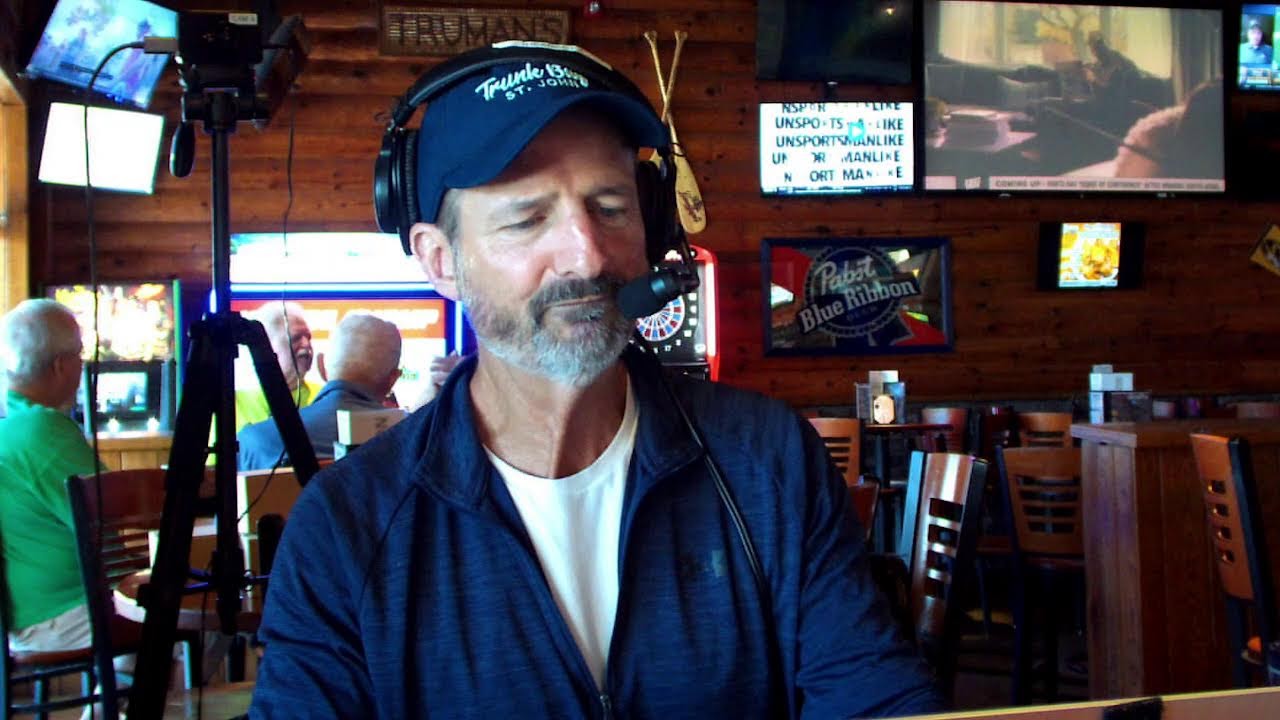
In this episode of TTBS, Tom Bradley discusses upcoming events at Truman’s Bar and Grill, including the first annual Bourbon Fest featuring live bluegrass music. Later, Ellis Bennis from FloatingAxe.com talks about creating short videos for social media to attract more viewers to the podcast. Tom also touches on adult content shared by The Real Columbia and recent political endorsements in Columbia. The episode wraps up with announcements about Creekside Pet Center’s birthday party and the return of football season at the University of Missouri.
Whether we like it or not, he's the self-proclaimed governor of mid-Missouri, and he's the host of TTBS, the podcast. Since we can't shut him the hell up, here's Tom Bradley. Nikki Garman, thank you so much. It is TTBS, the podcast, and here we are at Truman's Bar and Grill, live from Truman's Bar and Grill. Speaking of live, did I mention last week, Ellis Bennis, did I mention the live music that was coming up last weekend at Truman's Bar and Grill? No, I don't think you did. That's exciting. Okay, well, that's exciting. Yeah. Unless I don't share it, and then nobody knows about it. Let's tell people about it now. Okay. Who is it? Well, that was last weekend. Okay. So I missed that. Oh. Now, hold on. All right. I've got something coming up this weekend. Good. And I can hit it for you, which is the Bourbon Fest, and I understand it's their first annual. Now, I've had people tell me you can never call something a first annual at all, only if it's the second or further from there. Oh. Why? What do you think about that? That doesn't make any sense. Because it's the first ever. Yeah. You can't call it the first annual. They're like, well, that means you're planning on it annually, and then people will get technical and they're like, no, no, you can't do that kind of a thing. Yes or no? Should we call it the first annual or the first ever? I think first annual, becau...
Whether we like it or not, he's the self-proclaimed governor of mid-Missouri, and he's the host of TTBS, the podcast. Since we can't shut him the hell up, here's Tom Bradley. Nikki Garman, thank you so much. It is TTBS, the podcast, and here we are at Truman's Bar and Grill, live from Truman's Bar and Grill. Speaking of live, did I mention last week, Ellis Bennis, did I mention the live music that was coming up last weekend at Truman's Bar and Grill? No, I don't think you did. That's exciting. Okay, well, that's exciting. Yeah. Unless I don't share it, and then nobody knows about it. Let's tell people about it now. Okay. Who is it? Well, that was last weekend. Okay. So I missed that. Oh. Now, hold on. All right. I've got something coming up this weekend. Good. And I can hit it for you, which is the Bourbon Fest, and I understand it's their first annual. Now, I've had people tell me you can never call something a first annual at all, only if it's the second or further from there. Oh. Why? What do you think about that? That doesn't make any sense. Because it's the first ever. Yeah. You can't call it the first annual. They're like, well, that means you're planning on it annually, and then people will get technical and they're like, no, no, you can't do that kind of a thing. Yes or no? Should we call it the first annual or the first ever? I think first annual, because that also lets them know we're going to do this again. Because if you're just like, oh, first ever, then you might never do it again. Okay. But only if people behave themselves and come out here and join us. On Saturday, the first ever, first annual Bourbon Fest, flights, mini cocktails, gifts, and more. And live bluegrass from the band One More Dollar. Yee! I love bluegrass, especially when you're enjoying some fine, fine bourbon. And that's from 6 to 9 p.m. on Saturday, live at Truman's Bar and Grill. So join us. Well, I say join us. You won't make it here. You don't drink. I don't drink, but my wife and I really like live music. So I'll have to let her know that that's happening, and we'll see if we can find a babysitter. You might make it out for that. This morning, a guest on TTBS, the podcast, Bonnie Steinmetz, who is with the Como Renewal Project, and saying that she's with it may be an under-appreciation of all the work that she's done. Be that as it may, we will get through and talk to her in just a few minutes. As we move further into the podcast this morning, a couple of things. Number one, last week, we talked on the podcast about Mike Murphy and Comobuzz.com. I am now a subscriber to Comobuzz.com. And thank you, Mike, for doing the work that you're doing behind the scenes and letting us know what the hell's going on out there, because no other medias are doing that thing. So keep that in mind. But I certainly appreciate that. What do I have on my list over here? Ellis Bennis is with us, FloatingAxe.com. You said last week we need to do some shorts of our full videos. Our videos are close to an hour long. How long is a short? Well, normally, like you said, 15 seconds to 60 seconds. I think they bumped the upper limit. Maybe you can make them longer, but I'm going to shoot for 15 to 60 seconds. That's good enough? I think so. What do people want from these things? A quick laugh, a little bit of information, maybe just an insight or preview into the show. That's what I'm hoping. I'm hoping we get some extra people to check out the TTBS. This work that you do with Floating Axe is just like you're doing with me. You stay on my ass to go, Tom, we need to do this, we need to do this, and this, right? Absolutely. You're not wrong. So my clients are either I bug them, or they just say, please leave me alone, and you just do it all for me. Well, I'm glad somebody's there to bug me, so we'll start doing some of those on social media. I want to thank, before we get to Bonnie in a few minutes here, and Como Renewal Project, The Real Columbia. They share pictures, usually sent in by their followers on social media, of things they have found. Did you see the one of the guy recently, let me see what they say over here, this is a picture of a guy at a drinking fountain. The Real Columbia posting a picture of a man using a drinking fountain, but he wasn't using it for water to drink from. Oh, no. They said it's at the, Bonnie, did you see this? Yeah, I saw this one. They said it's at the right height. Now I want to let you know, these podcasts are set for adult content. Are you looking at it now? Yeah. You're making a really nasty face over there. This is why I don't use public drinking fountains. This is why we pack bottled waters and water bottles everywhere we go. It says that the drinking fountain is at the perfect height for him. Now I'm going to make a comment that they said on The Real Columbia, and it said, he doesn't appear to be a guy that is a juggler who would carry around a ball sack. He doesn't appear to be at a golf course. He's cleaning anything up. It says over here, individual seen cleaning his ball bag. I don't know what he's got going on there. Is it like, are we talking about his scrotum? Did he have it in the drinking fountain? I don't know. I'm scared to zoom in. It looks like he's mostly clothed, but I mean, he's wearing way less clothing than I would wear in a public place. That's for sure. Good. Oh my goodness. So we're going to be talking about apparently a homeless guy, and we'll get into talking about homeless with Bonnie Steinmetz here in just a little bit. Also, last week, I want to mention a couple of other things that I called up my heroes at the Columbia Professional Firefighters Union. I also called up their endorsement of a socialist who is now a member of the Columbia City Council after she won an election with the help of people like the Columbia Professional Firefighters. It was last week's Keep Your Eye on the Crap. I want to say hello and good morning to a brother who was listening, a firefighter, who then came in and joined me right after you left, Ellis Bennis, and he came in and I chatted with him briefly. He was not terribly happy with the statements, right? No, he wasn't. He wanted to defend some of the things they had done, and I said, well, that's fine, but you're going to get whom y'all elected. That's what's going to happen there. Keep Your Eye on the Crap. At the end of the podcast, that segment will be coming up this week brought to you by Family Focus Eye Care. Keep Your Eye on the Crap, FamFocusEye.com, and this week, a surprise on the crap and who we're going to be pointing out in that, so I want you to pay attention to that coming up at the end of the show today and keep your eye on the crap. That brings us up to time for Release the Hounds, the announcement this week, big announcement on TGVS, the podcast, brought to you by Creekside Pet Center, Creekside's Bed and Biscuit, and Dirty Harry's in Boonville, where they're going to be having their big birthday party, 10 years of Creekside Pet Center, which keeps expanding with new opportunities, new locations for you and your pets. They love your pets almost as much as you do, and sometimes even more. The birthday party's coming up at Creekside Pet Center, just south of Columbia on 63, at 163, and that's on September the 13th. It's a huge bash going on. The big announcement is that two weeks from tonight, this isn't like something you shouldn't know or should know, whatever, it's something you should know but you're not thinking about. Two weeks from tonight, football season is back. Oh, that's awesome. Monroe Field, University of Missouri football Tigers are going to be playing. Wait, are they going to have the whole new structure done? No. You can climb up there if you want to. Instead of sitting on the grass, you can skirt up a girder. Don't expect any table service up there just yet. No, no, no. They've got to have it completed to the point that people can be near it and not get hurt and everything, and I don't know how much security they're going to have out there working it. The north end zone is going to be amazing. I would make jokes about Claire McCaskill, former United States Senator from the great state of Missouri, and about her directionally being challenged at Farrell Field, even though she grew up here in Columbia, but I'm not going to make jokes about it right now, but I do want to bring that up. And a couple of things in the announcement, and not just, is that Thursday night going into Labor Day weekend, our first home game, and it's two weeks from tonight, but that's followed the following weekend by KU coming to town. Gay hawkers crossing over and coming into the state of Missouri, and we're going to kick the crap out of them. But that's not… Did you see the scientific study that proved, indeed, that Kansas is literally and scientifically flatter than a pancake? Wow, no, I did not see that. There was a scientific study. A bunch of nerds were driving across Kansas, like, is this true? They actually scanned a pancake, they compared it to the topology of Kansas, and they were like, it is true. Kansas is literally flatter than a pancake. Wow. What about the personalities of Kansas City? I have some really good friends from Kansas, so I won't say anything mean. They're flat as well, is what I'm going to go ahead and say. I want to bring this up to you, that not only do we have those two first games, but it's not just three home games to lead off the season, or four, or five. We have six home football games in a row on the program this year, and all together we have eight games at Vero Field this year. So things have changed dramatically, so that's kind of… It's not like we're making an announcement, it's just a reminder to you of exactly what's going on out there in the world at Vero Field and around here in Columbia. And if you're listening from outside the area, like following the Tigers, then please, by all means, come on in and join us for that. With those out of the way, a lot of the housekeeping and business at the tails, it means I have to bring up my guitar work. This is you. Don't tell anybody, but yes it is. Which means I need to say hello and good morning to our guest today, Bonnie Steinmetz of the Como Renewal Project, and Bonnie, good morning, thank you for being with us today. I had a little bit of a discussion with your husband last night, because I don't know if you usually see him every other Wednesday night, but I do. Really hope it's more often than that. I don't know when she gets a chance to see him, I don't have any idea. But every other Wednesday we get together, and it was the gang together from our Baroque Brewing gathering. And your husband, Bob, he's a great guy. When I see him, he's always very calm. He's the kind of guy you would like to sit down with and plan your financial future. That's what he does, right? Yes, he does. But if he went to a Mizzou game, then he's not so calm. Oh really? Right. I'll try to catch him at a Mizzou game then, very, very soon. Good morning, thanks for being here. That's what you're doing behind the scenes, trying to bring the rest of the community up to speed on what the hell we're doing with homeless individuals and the homelessness in Columbia. When we talk about what your husband does, you are in hospital administration, is that right? That's correct. And how long have you been doing that? I'm a nurse by trade, I've been a nurse for decades, and for the past year and a half I've been doing more process improvement in health care. Well I like improving processes. So I'd like to see some more of that happening. Right. Can I mention where you are right now? Sure. Veterans Hospital. Yes, I'm at the VA Hospital. That's wonderful. Truman's Veterans Hospital. And I want to say this, I have no idea if it has anything to pertain to you and your career, when we had a lot of disgruntled attitudes and auditing and investigative work being done by reporting around the nation in veterans hospitals, there were a lot of bad stories coming out. But all I heard from everyone is how phenomenal, and during this they were talking about, and they still bring it up to me, how phenomenal Truman's is. So you do a great job over there, all you guys do. It is a good hospital. We have veterans who could go to St. Louis or Kansas City because it's closer, but they choose to come here. And that's a lot, it really does. So by trade, a nurse, and now in a hospital administration, what the heck did you do starting up something called the Como Renewal Project? Why did you start anything at all, why? I have lived here since 1993, specifically moved here because of the healthcare system and also at the time U.S. News and World Report rated Columbia as one of the best cities to live in. Oh my gosh, do you remember when that came out? Yeah, I remember that still. Yes, I do. And, you know, so we came here and did a visit. It was close enough to the rest of our family, so we ended up moving here. I've loved living in Columbia, always very proud of this town. And then over the last few years, just starting to see a decline and then started seeing panhandlers, homeless camps, people sleeping out in public, and that was disturbing to me. And then I actually came across the Facebook page, The Real Columbia, Missouri, and started seeing photos there that even exposed more than what I was seeing, you know, just traveling around Columbia in my car. And on that webpage, you know, the amount of followers increased and I saw people very upset about it as well, lots of complaints and venting about it. But at some point I was like, okay, we can be on a Facebook page and complain all we want, but that's not going to change anything. You wanted to put some teeth and some action. Yes. That's awesome. Yes. So I started thinking about what could be done and I tried reaching out to a few people of influence in Columbia saying, hey, can we start something up? Can we come up with a strategy? Didn't get a whole lot of response from that. And then just eventually I had an initial meeting and there were just four of us in that meeting. We met at a restaurant. We spoke about it. We said, what can we do? Let's have a strategy. And then from there we had another meeting and I think there were maybe about 12 people at that meeting and then a third meeting it had grown to about 20 some people. So then we actually have a group that's about 69 members. A lot of those members aren't really active in our private group, but we do have a fair amount that are. And we just, you know, we talk about things that we can do to help make the city better. So this whole thing starts and your goal is going to be to make a difference, but you need people to notice you. I guess that's one of the reasons why we got together here this morning is that we can sit here and talk about this. I also want your insight and everything else because you spend a lot more time than I have, like really getting deeper into the subject matter. But you want to get some things to happen. So you had a private page on social media. Now you've taken another and you have a public page also. And people can follow you by looking up Como Renewal Project on Facebook. Are you on any other social media? No, that's it. Okay. And you want to get the attention of the leaders in Columbia, be they part of the city manager's office, other branches of our government locally, or the city council members and specifically the mayor. Have you talked to the city council since you started this up? I have presented twice in front of city council. So the first time was about pedestrian safety. So I spoke about pedestrians being on the medians and at intersections and how dangerous that is. I actually brought photos with me that I showed during the council meeting of pedestrians with, you know, sleeping on the medians, part of their body being off the median. Some of them passed out or, you know, in an altered state of mind. So that was the first presentation that I did. And then the second presentation I did was actually to speak about the survey that they did. I think it was like September of 24, where they hired a consulting firm and they surveyed a certain amount of the residents of Columbia. I think they got over 800 responses back. And I just, I felt like a lot of people were not familiar with the results from that survey. So I kind of did a PowerPoint presentation highlighting some of the things that were brought up in the survey. And there were a lot of comments from people in the survey, too, that were really revealing about what, you know, what is mattering the most to people who live here. And so I just kind of wanted to get that out in front of the public. I want to get more into the discussion you're having about some of the clinical work and research work and presenting it and trying to contact people. But I also want to talk about the emotional side that we're all having, including you. Yes. And people that maybe don't agree with you and I that we have a problem here with homelessness. So let's start with us a little bit. Why do you think it bothers me so much that we have homeless wandering around, sleeping on sidewalks, shooting up with needles, standing on medians, begging for money in the middle of an intersection? Why does it bother me so much? Well, I'm going to assume that it's the same reason that it bothers me and others. You know, like I said, we have a great town here and we've seen the history of it. We are working citizens. We pay taxes here. We have families and our lives have been negatively impacted significantly and daily because the enabling has allowed us to get out of control. Now, I'm just going to be the other side of the coin to ask the questions and that's it. What has it done to you, Bonnie? What has it done to you? Somebody's out there and they're drugged out and sleeping it off on a sidewalk somewhere and you're not even walking on that sidewalk. So what does it bother you? What has it really done to your life? Well, it can be as small as not enjoying the scenery as I'm driving in my car because now I'm seeing tents and litter everywhere and I'm seeing people, you know, hauling carts to and fro from camps. But it can be as significant as people stop using the trails. They stop going to parks. They may stop going downtown because there are people sleeping in the doorways. If you were a disabled person, you may not even be able to pass through an area because of somebody blocking a sidewalk or a storefront. You mentioned not using the trails. I guess, I don't know if you guys saw earlier this week, apparently we had a dude that was riding a bicycle naked on the trail. I heard that. You heard about that? Thank God you heard it and didn't see it. I didn't see it. If you or I did that, we would be in jail and we would be on a no-vento registry. Believe me, because that's what happened when I did it. I'm going to Google that later. Case net. I don't know that he's a homeless guy. I don't know that he's on drugs. I don't know anything about that. There's not a lot of rational, well-intentioned, or employed individuals that are going to do that. That's my thought. I understand it. But part of my worry, part of the thing that I think is a reason I'm upset, and I believe this is a problem, is because I think a lawlessness with a person on the street can beg for more lawlessness from other individuals. It can. But I think that person on the trail, if we don't stop that, it'll happen again if not him by someone else. But then it may be the next thing that happens on a street nearby, and that may go over and be at a schoolyard nearby, and then some people are hanging outside a church on a Sunday morning doing something wrong. I just think it begets more of the same activity. So that's a worry that I have. When I look at this, Bonnie, can I think that you've done research on homelessness? Now I just jotted this down off the top of my head. Other cities, are there answers to this? What are some of the problems it causes that I'm not aware of yet? Laws and protections for us. Laws and protections for the homeless who might be doing things wrong. Mistakes we're making in our assumptions. I'm sorry to throw this all out so quickly. We'll go back to it. How much is too much homelessness? What should we have in a city, in a community our size? Anything good coming out of homelessness? I don't know. And what the hell is an opportunity campus? So I know that you're not the end-all expert on this stuff, but why don't we start off with other cities? Have you looked at other cities? I have. And? So it's a growing problem throughout the U.S. The pandemic definitely had a part to play in that. I think it really accelerated around that time and continues to increase. And different cities have handled it differently. So there is the Supreme Court ruling that came from Oregon PASS because they were having a significant problem with homelessness. And the Supreme Court ruled that in that situation, and cities across the U.S., that you can take action and you can enforce ordinances saying you're not allowed to sleep in public, you're not allowed to have camps and bedding in public places because it's detrimental to the community. So it's, you know, there's a lot to unpack from what you said. There's a lot of causes for it, a lot of complicating factors, but clearly what we are… Let's just stick right now, because I'll go back through everything, at least the best we can, because this time will fly by. But in your world, and you're looking around, and continue talking about other cities, we've heard about San Francisco. I've only been there once, it was fabulous, it was a great time. That was 39 years ago. So I don't know what it's like now, but I know people talk about the cost of living and that's the problem. I'm like, that's not the problem. Those people are coming from outside of what is the secluded area of San Francisco proper. They're coming from across the bridges and moving into there. They have no money, except maybe some drugs, I guess, I'm not sure. But that's the San Francisco. What about other towns in the Midwest that are about our size-ish? Have you looked at some of those? So Lawrence, Kansas, I don't know how significant their problem was, but it was enough that they wanted to take some action. And so they actually have made it an ordinance, I assume, but a program where if you are not from Lawrence, Kansas, then they give you three days of support and then they help you get back to the community that you're originally from. Do you think their problem originally is about what we have now or less or more? Do you have any idea? I don't, but clearly it was enough that they wanted to take some action for it. And here we haven't done anything along those lines. If anything, we're lighting more and more beacons to bring in homeless into our community, I think. Right? Yeah. We definitely have. I have personally walked around and spoken with homeless. I've gone to camps, and it's really interesting to ask them where they're from, and the majority are not from Columbia. Other people have done the same and heard the same results. I don't know if you caught this or not, but one of the officers that's with the homeless outreach team, he has had a couple of quotes out there saying that we are attracting people from other cities. Did they say how or why? Is it because of our services are so great? Yes. Yes. We are resource rich, and he even said it seems like the more money and support that we give, the worse the problem is. You know, Ellis, when we had the police chief in just a few weeks back, I don't know, four weeks ago? I don't know. When we had the police chief in, Chief Schlutie spoke, but you had to look between the words to see what she really meant, and she brought up Lawrence, Kansas, and you remember that. Yep. I sure do. I was going to ask you, was Lawrence the same city she mentioned? Yes. Okay. Yeah. And what she was saying is, in so many words, in between the words, she was like, they've taken care of some issues, and we need to move in that same direction, but she's not coming out and saying it verbatim like I just did. So that's an area that's done some things, because they were working against it. We're not working against homeless coming in. It's like we're inviting them in. What about the fact that we're just not very nice humans, because we're sitting here going, are you from Columbia? You're not. Then get the hell out of here. That makes us horrible people, I think, doesn't it? No. No. No, it doesn't. So in 2024, the city spent $6.5 million towards homelessness, and that does not include donations that were given to various organizations. So that was just city-funded, either through ARPA money or through social service contracts. So when you say ARPA money, social service contracts, that's $6.5 million. Is that, what I say, our tax money? I understand it's all our tax money, but I was just curious, was that local tax money only raised, or was that federal money that came in that they stole, I mean, that they got from other directions? That includes federal money, if you're talking ARPA funds, but that's in the millions of dollars, and then we start deciding where that's going to go. And I think it was like $3.5 million in funds that we put toward the Opportunity Campus, I believe. $3 million. $3 million. And that goes out. How tough was it for you to put together those numbers? Not tough. You can find a lot, actually, on the como.gov website. So you can see the social services contracts there, you can see the ARPA money information. Some of the information that I've received, specifically about some of the NGOs, the shelters, I've done sunshine requests for that, and seeing how they do the billing system and what sort of… And what does NGO stand for? Non-governmental organizations. Okay. So, like, there's a place in town that we know of, a church, that received $1.5 million, I think, in funding? That was part of a sunshine request? Yes. Okay. And are you seeing our media outlets over the course of time, do they put some of this in a story and maybe we're just not noticing it, that it comes out pieces at a time? I haven't seen that. It's not really standing out to you. The homeless shelters, I certainly appreciate someone having a giving heart and wanting to help out people that need that. Columbia is one of the most generous cities you're going to find across the Midwest, and I think we take a lot of heat over here in Columbia, because Columbia is so blue in the center of a very red state, so is an inner area of Kansas City and an inner area of the greater St. Louis metro area, okay? Very blue in a very red state, if you want to draw lines based on that. You can also find people that lean very conservative who are very generous, so a lot of people, no matter who they are, what political affiliation or not, they're very giving in this area. We donate a lot of money here, and per capita, much more than any other community across mid-Missouri, if you're just proper Columbia. And that's an amazing thing. So people here do like to give, and when you have a church or an organization that wants to help homeless or people that are down to luck or they're substance abuse or addictions, I mean, that's a great, great thing, but we've gotten to a point, would you say that we're doing too much? Is that what it feels like? Can you do too much when you're helping a charity? I think for one thing, some of the charities, their structure has become more like a business, so they have a significant number of salaried staff, and one of them that I looked into, actually, by the time that they had expenses for the salaries and then upkeep on the building, it only left $71,000. Out of? To actually use toward the cost. So I think… What was the starting number? Do you mind sharing that? Because, I mean, if they started with $80,000, then that's not bad. But if they started with $1,000,000, that's a really big problem. I think it was over $500,000. Okay. So starting out with $500,000, and I'm assuming that is given money, either donated money or government money? Yes. Okay. So out of $500,000, between salaries, building upkeep, they had $71,000 left to actually help people. To spend on these kind of things. It's interesting when you get into that. I know a lot of people can't handle math, especially if it's just verbally, audio. They're like, I don't know. Their eyes glaze over. But there's a lot of money being spent on the cause of helping homeless in Boone County, specifically Columbia. Daily, weekly, annually, right here. Let's talk about some of the other issues, like laws and protections. This has come out of at least a dozen people's mouths, including at least one person last night at our gathering that said, I understand that maybe the state controls those byways, like these different roadways in Columbia, so therefore we can't pass an ordinance that says you cannot panhandle on the island. And I said, no, I'm going to go ahead and take issue with you on that one. I'm pretty sure that we have fireworks outlawed in Columbia. Not just lighting them. You can't possess them. You could be jailed for possessing. I did not know that. Well, maybe not jailed. But you're not supposed to possess. It's not like you can stand on a median and sell fireworks and have the police come and go, you can't take it. I was like, yeah, I'm standing on state property. Have you heard that claim? Yes, and I think people are a little confused, and one thing I would like to clear up is we have to be careful about using the word panhandling, because that is a protected right. It is freedom of speech, and the Supreme Court ruled on that. I can't panhandle in the middle of City Hall while they're trying to have a City Council meeting. Correct? Right. So, individual rights are also protected. So somebody cannot approach and panhandle somebody else if they cannot walk away from it. So if you're on a bus, you can't panhandle. If you're approaching a line of people who are waiting to get into a concert, you can't panhandle there. But open public places, you can. So we wouldn't be blocking the panhandling activity. We would simply say, we would remove the panhandling thing. I think what we're all kind of agreeing on is you can't stand for more than the time it takes you to pass from one side of the street to the other in a median. I think that would be the right language, right? Solicitation has its limits to where you can do that, whether it's panhandling, selling Jesus Christ Almighty, or whatever it might be. I can't stand in the middle of I-70 with a sign, like I'm going to get arrested because I'm obstructing the flow of traffic. Right, right. And so why haven't we at least gone to that level with things like within 10 feet of an intersection, which is reasonable, that you can't enter an intersection to solicit, that you can't be on a median. How come we haven't gone to that level? It's happened in St. Louis and several municipalities, right? And I don't think it even needs to be about solicitation. Just do not have pedestrians loitering at intersections and medians. There you go. Don't loiter. So that would include things like your dog, your three shopping carts, a pickle barrel, whatever it is you're bringing around. Your phone that's nicer than mine. And a pop-up canopy. There was a whole group of young people just having a party on the median the other night. And it was after dark. Not safe. Do you think they were homeless? They looked like new faces. They were young girls and a lot of people. They were certainly vagrant. So I don't know for sure what they were doing there. There are already ordinances in our city charter that says you should not extend your arms outside of a window unless you're giving a hand signal. Sorry, I only thought of one hand signal. If you're turning right or left. And also that pedestrians are not to impede the flow of traffic. So these are things that could be enforced that are not. Those are already there. I mean, we already have those on the books, those ordinances in Columbia, and we're not doing anything about that. There must be something in a director from the city manager and his, well he's got four assistants, I think it is, something like that. A director from the city manager to the chief of police saying, can we not worry about this thing that's going on there? It looks bad on us. We're not going to get into that whole thing. Let's just keep it. Why does it look bad? I mean, have you talked to anybody? Because I have not been able to find anybody on the side of we absolutely want people to be panhandling. All the friend group that I know, everything, even the people that are like, we want to help the folks. They're still saying you shouldn't be there on the side of the road, passed out asking for money. Have you run into anybody that's pushed back and be like, no, we absolutely want this in our town. Have you encountered that attitude? There are comments on the real Columbia, Missouri that real people, not trolls that people say, you know, they, they have the right, we're, we're helping them, you know, if we want to give cash to them, then so be it. Let me point out a couple of things here with the real Columbia. Number one, there's over 27,000 followers on their Facebook page after his Facebook got canceled. Yeah. And I think they had 13 or 14,000 at that time and they didn't start back at zero. So there are 20 over 27,000 now. And there are a lot of people that don't like that Facebook page and the real Columbia receives death threats. Yeah. He has taken screenshots of death threats of promise of physical harm if they ever find out who it is. Well, and that's why I use the word they, which is okay to use the word they it's the nineties. That's not a problem, but they have received death threats and there are people constantly every day. Well, why do you have to keep posting pictures of this thing? You're a horrible human being to do that. And it's like, actually, this is what's going on in our community. And it's good to show what's going on because something needs to be done to help the individuals and also to take this away from our streets and our parks, including ball washing stations. If you will, by the way, Bonnie, your husband, Bob, does he know that you have visited homeless camps? Yes. Do you take security with you? No, don't answer me. We don't want to let anybody know, but I think you need to be packing some heat. And I know some people that that do so, but I just be careful out there. I definitely was careful. Did you see that there were several people saying there was a homeless camp across the highway? Highway 63 from Menards. You know, you can save big money at Menards. Yeah. I'm just letting you know that you want to sing it for you. Clean that out like three or four times. That's the jingle? No, no, no. Of the homeless camp. Yeah. Clean the homeless camp out. Yeah. I think I think they have. So they said yesterday it was cleaned up. Did you see the post that said that? Yes. And you're aware of that area? Yes. I want to ask you something. With your research into this locally, do you have any idea why they're not telling us about that on a regular basis? Either the city or the actual daily 24 hours a day media outlets, why they're not telling us we are now cleaning up a homeless camp? Everything that I've seen from the city and to some extent with the media is they just want to ignore it. And they have ignored it. And I feel like this would continue and only get worse, except they're starting to face some pressure from the DNR. And that's why they're doing it. But the last time that they cleaned up that area, I kid you not, 24 hours later, I saw people moving their things right back to it. That happens over and over and over again. There's no consequence. Did you go park near there to keep an eye on it or did you just drill by and happen to see this? Yes. Yes. And they're bringing all of their things right back. So unfortunately, we've cleaned up one area and then we're just going to litter a new area. So that's why. Absolutely amazing. And there's no consequence. Nobody was arrested. And I don't know, they could hide that relatively easy because it was like a MoDOT crew or something cleaning that out. Well, then they just say, oh, this is street maintenance. They could hide the monetary expenditure of that. But those we had a lady tell us that was $10,000. Isn't that right? $10,000 to clean up one area on one property. It was less than an acre. It was like a third of an acre and that's what it cost them to clean that up on their private property. And that was their private money. Well, how much of our money is going towards these cleanup efforts? It can't be cheap. Those guys don't make minimum wage. They're driving trucks that don't just, you know, burn air. Like there's all of this money going into it. There is a lot. Right. I actually recently did two Sunshine requests. I did one for information about the pedestrian safety. So they hired a consultant. I forget what they pay. $1,000. Every time you say that, I shiver a little bit. Hired a consultant. And the city council also had like their own work sessions. So I wanted to see those documents because I hadn't really heard much about it. And then I also Sunshine requested to know specifics about city cleanup of camps. I wanted to know how much it cost. How many times it's been done. What's the location? What were the findings at the camps? For a while, the city also had a webpage that you could report the location of a camp. And I wanted to know how many reports they received. What action did they take on that? That is now broken. So it says that you can report it, but then when you go to it, it doesn't take you anywhere. And so I asked about that in the Sunshine request. And unfortunately, they want to charge over $500 for each Sunshine request for the time that it will take for somebody in the city clerk office to gather that information. Is that allowed? I thought the Sunshine requests were required by law. But they're allowed to charge for it? Yes, they are. Because it can put them at a… it can cost. And you could put in 18 Sunshine requests every single day and they'd be left going banga day. So they have to put a limit, you know, by putting the cost on there too. And I think that makes sense. Have you, in reaching out to the city council, have you met with any city council members one-on-one to go have a cup of coffee with them or anything like that? Not one-to-one, no. Do you want to? You put out a request right now for that. I've thought about it, but honestly, I'm not very optimistic. I mean, they've been approached in so many different ways through letters. People have met with them one-to-one, council meetings. I just feel like that it's unfortunately kind of pointless. I have this other thing that's lurking in the back of my mind, and I can't believe the number of people in town that don't know really anything about it. The Opportunity Campus. Now, as a marketeer, congratulations on your BS name for that place. The reality is it's a… I don't want to call it just a homeless shelter. I don't want to sell it short for what it's trying to do. If it was also a zoo, I'd say homeless shelter in the zoo, and maybe it'll become that. It's a homeless shelter, and it's multiple operations under one roof where they want to help people reintegrate into society. And I'm saying that out of the goodness of my heart. People when you see them homeless, those aren't people that are simply out of a place to live. That's not what it is. It's people that have left otherwise society as we know it here, and they've got some really horrible things going on with them. It's either inside them, it's been forces that have happened to them, a lot of bad things all the way. None of it's good. You know, nothing good. What are you doing on a street corner begging for money at 2am? Nothing good's going on there. So it's horrible things. The Opportunity Campus is being built right now. I know people my age that are engaged in this community that don't know that, and that's blowing my mind. They have no idea. And I was telling them last night, and they're like, you mean that field over there next to the power plant? And I go, yeah, the field that's been there forever was purchased by Betsy Peters, who was a city council person at the time, and then without telling the previous owners what she was going to do with the property, she then had it rezoned and then gave the property somehow to these folks that are building the Opportunity Campus. It's going to be huge. Yeah. It is. I mean, it's being built right now. Have you ever been by there recently? It's massive. It's massive. And we're talking hundreds of people that can be there in one given evening. Is that, in your estimation, Bonnie Steinmetz, is it going to increase the number of people that are homeless coming to Columbia? Well, for one thing, I would hope that they would reserve it for at least people who live in Boone County, if not Columbia. But how would you do that? And following their past, they're going to do no such thing. There's no restrictions on any services now, so why would they change that policy with this huge new building? So, you know, I think it has the potential to help. It has a medical clinic in it. They are going to, you know, try to address substance abuse, mental illness. But unfortunately, we haven't focused on the root causes of homelessness this entire time. We've just been basically supporting them, which is a humane thing to do, but we aren't addressing the root causes. And so I really wish that we had put the money and the resources to that more than shelter beds. But hopefully it will do some good. When you talk to people that you've met in these homeless camps, and you ask them where they're from and things like that, do any of them say, I was living at the Shady Meadows apartment complex for the last five years, but they raised the rent and I couldn't afford it, and that's how I wound up on the streets. Does anybody say anything, any kind of a story like that to you? I haven't heard that. I know that there are those situations, and I think that's where a lot of times there's a difference between acutely homeless and chronically homeless. A lot of the chronic homeless, it is a choice. You know, one gentleman that we spoke with, we asked him why he chose to live that way, and he said, I don't like people. I don't want to be around them. And we asked him, you know, if he utilizes any of the shelters, and he said, no, I don't want to be there. I don't want to have the rules. I just want to be able to do what I want to do. So, you know, for the acutely homeless, let's do everything that we can to get them back on their feet, or let's even try to help them from getting to that point. So when you say acutely homeless and to help them, we're talking about someone that did have a place and delivered out of their car, but then the car breaks down and now it's not doing anything. So now they even stopped living out of their car. And they're not there because they're necessarily bipolar, or that they are a veteran with PTSD, or that they've been on heroin for the last year and a half, and selling themselves, their body, maybe blood, whatever they can do in order to take care of that next high. And so we're talking about people that could really use a hand. And with a hand, something positive could come out of that. Do you think, and what you know about the Opportunity Campus, do you think it will be able to help someone like that? I think it has potential to, if it's handled correctly. My worry is that what I've seen with the prior shelters, that there was just a lot of loitering. There was actually detrimental impacts to the surrounding neighborhoods. And there wasn't, there really wasn't outcomes that they were focusing on. I think that's, I would hope that they have really outlined what their goals are, what data that they're going to measure, so that they can be transparent and so that they can know if what they're doing is actually helping, or if we need to pivot and try something different. They need to be monitoring those things and measuring it. Have you heard the, I always mess this up, the one count, the number, the night, the night out, whatever they call that damn thing. Every year, we do a nationwide, on one night, a nationwide count of homeless across the country. Now I think it's a great idea, but I don't know that it actually works very well. It's like a homeless census, basically. And so, unless you're like Joseph, Mary, and Jesus, and you're on a donkey, and you're moving across, and you're like, come back here, I need to count you, I need to count you. Have you heard the number for Boone County and or Columbia this year? So the point in time, I think, is what it was called. That's what it's called. See, that's why I don't remember. It doesn't make any sense. The point in time. We need good names. We're marketers. Opportunity campus. I think that actually happened kind of more in the wintertime, which I think is interesting. But there was another organization that recently quoted a number, and they said it was like 284, or something like that. That would have meant it's dropped. Yes. It hasn't dropped. We don't believe it. Was that Boone County specifically, though? Columbia. Just Columbia. I haven't seen the numbers yet this year, and I keep asking, like, what's going on? And by the way, I have to keep trying to look for the stuff, because we don't have any media that are actually doing the work like they used to do, be that as it may. So we have that. How are we going to know if this new campus is working? How would we know? That's what I'm saying. I mean, we need to measure. We need to say how many actually were able to find homes. How many went through a rehabilitation program? How many were able to successfully get employed? Those are all things that we need to be looking at. And I'm not saying that it needs to or it's ever going to end existing, but I will say this. Let's say they can handle 200 people in there, and we have 400 homeless in the area the day that it opens, which is less than a year away, I do believe. 400 in the area, 200 go in there. If a year later, there are 500 in the area, do they then say, this isn't working, or do they say, see, we need to build it bigger? That's my question. Do you have any idea? You're laughing, because it's… I guess they would say, let's build it bigger. It's the tragedy that is the comedy that is Columbia, Missouri. I want to go back to what you have done throughout your life. A nurse. You actually woke up one day as a young girl, and you go, I want to help people. I want to help them when they poop on themselves. I want to help them when they need to have a needle stuck in their arm. You spent the first portion of your career, a number of years, as a nurse, helping people. That's a very giving, nurturing role, isn't it? Yes. How do you find yourself now in the position of creating the Como Renewal Project? And people look at this and might say that you are not giving, that you're not a caring person. How do you deal with that? I'm glad you asked, and I think this isn't just my situation. It's anybody who has the same ideology. Think of if you had a family member who was abusing substance or was mentally ill. Would you provide everything that they needed and allow that behavior to continue? If they were living in your house, would you give them cash? Would you completely support them and that lifestyle? That would not be humane. That would not be a loving thing to do. Right. I agree. When you really look at the photos and the videos of these people out in extreme temperatures, there was a video of a woman having a psychotic incident. She was hallucinating on the sidewalk. It breaks my heart. So we have to do something different. What we're doing now is not working, and it's actually keeping people down and in that situation. I completely agree. I've talked about this a couple of different times, about the definition of the word help. The people that I would probably get a little frustrated with and a little angry with that are talking about that we're bigots or hateful or angry or whatever, I think they have a same help sense in their heart. There's very few that I really do think have an evil intention, but the problem is we differ on what help really means. When we say help, I think everybody sitting around these cameras here, I think when we say help, we want to see positive outcomes. We want to see them get off substances. We want to see them be housed again. We want to see them becoming a productive member of society with jobs and families and people that are lifting them up and giving them purpose in life. I absolutely agree wholeheartedly with you. Help does not mean giving them cash and leaving them out there. I think that's harming them. I think we're actually hurting them by allowing them. Same thing with a child, right? If a kid is running out into traffic, we stop them from that behavior. We teach them not to do that again. If they're doing something else that's going to hurt them, we correct them. If I use the D word here, we discipline them, and then we try to get them to understand and then have a more positive outcome. I'm glad you guys have hit on that also. We have a family member who's an addict, heroin, opium's a bitch. I think she was at about the end of apparently a rope at some point, and we took her in. I sat her down, and I said, here's the deal. We love you. If you lie to us, you're out. If you steal from us, you're out. If you use, you're out. We love you. That's what I told her. She stayed with us for a month and a half or something like that, and then she left. She was stealing and lying and using that night, but she didn't do it under our house. I think there was something that worked out there that made sense. We still love her. But then that addiction got the best of her after six weeks. I mean, yeah. I think that's what it came down to, but helping, what's going to happen? I can't let you stay here lying to us, stealing from us, using in our house. We had a teenage girl still as a daughter living in the house. No, that's not going to happen here. What do you do to help, and where do you set the parameters on this thing? Where are the boundaries? That's what we've got to figure out. As we finish up, one of the things I said to Bob, your husband, last night, I said, I don't know what the marching orders are right now with Bonnie. I want to know, what would you like to tell people to do? You have a page. Should we promote the page? I'll put it in. Sure. Because I do an edit on our Facebook feed after the live feed. I can go back in, and I can change the post. I'll put your link in there. Is that what you want people to do, follow the Facebook page? What would you like to tell people to do? What else can we do? How can we help? I would like for people to become more active. What I find, even within the private group, is there's just a few of us who are trying to get the message out and trying to come up with solutions. We need people to band together. We need them to be a voice. Do you have an initiative that we could get behind right now and push with you? Because, again, I talked last week about it's not just apathy, it's also a lack of knowing what to do. Like, I'm not going to become an investigative reporter, right? But I'm so glad that Como Buzz is, and so we can support him 10 bucks a month, and we know he's going to be doing something holding people's feet to the fire. Do you have an initiative? Is there something you're backing that the rest of us that just kind of don't know what to do can get behind you and help push? And if so, what is that? What can we do? How can we help you? I think the time is really critical right now for people to have a voice. So I would say write letters, not only to the city leadership, and that includes the city manager, not just the mayor. It's really the city manager has a great responsibility, and I think people don't think about that. So writing letters, but when you write those letters or send the emails, include all of our Missouri politicians on that, include the DNR, include Health and Human Services. I'm even compiling one, and I am going to include the White House on it. So I think we need to turn up the heat. I would say business owners downtown and in the district need to band together and let their voice be heard, because their businesses are suffering from it. We need to have some unity. We need to vote. We need to be more vocal. Go to your city council meetings. You can find where those meetings are on the como.gov page, what the dates are, what the agenda is and everything. You can request to speak at city council. So you get three to five minutes to speak if there's something that you would like to discuss. We just need people to be more active. Well, I think that's a great way to leave it here this morning as we move off the subject matter, and thank you, Bonnie Steinmetz, for being a part of the show. Thanks for all you're doing. Yeah. Yeah. We've got a lot more work ahead of us, don't we? We do. A lot more work ahead of us. Bonnie Steinmetz and the Como Renewal Project, we'll have the links on our Facebook page and a couple of other places probably. I'll ask Ellis Menes, because he's in charge. Thank you very much for being here this morning. And we finish up a little bit, Bonnie, so if you need to roll, you can do that this time. Or you can hang out for the five minutes, which is probably about what it will take for us to finish up. There's just a little bit more that I've got to go through here, Ellis. And that's the keeping your eye on the crap. And you know, I want to jump right into it, but I can't jump into it without our actual lead to get into it. So I will do that at this time. Are you ready? You've got to keep your eyes on the crap. You can't handle the crap. Looky here. There's a big difference between shit and Shinola. As my great-grandfather always said, Matumba, keep your eye on the crap. You know, that guy at the park, I guess I just keep bringing this up, don't I? The guy that was at the park doing that, he was shitting Shinola. He was taking care of the shit and getting his Shinola on, am I right? Am I right about that? I call him Matumba. Keeping your eye on the crap, brought to you by Family Focus Eye Care at FamFocusEye.com. Two locations, Columbia, that's my spot that I go to. And then you've also got Eldon as well. Yeah, I'm going to surprise him sometime. I like going to the lake a few times a year. I'll probably still go down. Pop into Eldon. Yeah, I'm going to stop by and be like, what's up, people? Family Focus Eye Care. Here's the crap this week. Us. Us. When we get upset, we say stupid things. And when we do that, it only hurts what the real, the greater message is. I'm number one in line for doing this, so I'm going to put myself there first and beat myself up on this thing. We turn into children on this thing. We start name calling. We start making fun of someone's looks. That's not nice. You're going to fall down and put your face into a fire hydrant tomorrow, and you're going to wake up. And that happens. It does. People fall down, and they hurt themselves. And then the next day, people are like, would you eat a fire hydrant? You're like, yeah. Name calling, picking on their personal oddities that may have nothing to do with the actual reason that we're upset. We disagree on politics. And then we start going on these other things. Instead of talking about their stance on an issue, we say, well, they never met a tax increase they didn't like, and they never met a donut they didn't eat. That's a nasty thing to say. I love it. Do you like donuts? Well, of course. Yeah. I stay away from donuts. They're bad for you. Yeah. Do you know that there is inherently nothing good about a donut? I categorically disagree with you. I mean, health-wise, health benefits, absolutely. There's nothing good. But that delicious sugariness. That first thing that comes along, here's a guy that never met a donut he didn't like. Now, this is what we do. Okay, so point in that I look at, there's a picture I saw posted. And who shared this? The city of Columbia, Missouri, government. They posted this. It was a picture of four people. Let's see. There's Mayor Barbara Buffalo. There was Sidney Olson. She's a voice piece for the city. What is her name? Like communications director or something like that? That's pretty typical, yeah. City manager, DeCarlin Seawood, and deputy city manager, Matt Unryne, says, we're grateful for the leadership, guidance, and mentorship they provide to the city staff every day. And this was a, what was it, is their, what was it, their selfie day. It was like national selfie day. Selfie day. I've seen it here, yeah. And I remember reading what some people wrote about these individuals who were with the city of Columbia. Now, are there comments allowed on these posts? I don't think there are, are they? Well, I don't know, but this was shared by the Real Columbia, Missouri. And on that page, Melody chimed in, don't know who two of them are, but the other two are worthless pieces of garbage. Now. I wish she would be more direct with her feelings. Melody, those may be somebody's dad, or mom, or someone's love interest, or whatever. Andrew says, the buffalo is a lot shorter than I expected. That guy's tall, though. That guy's got to be really tall. Matt Unryne, very tall. He's very tall. David said, she did lose a lot of weight for all her photo ops. Now, there's no reason to get in her weight losses, or gains, or anything else going on there. Because they certainly look well-housed and fed, except Buffalo looks like she traded one eating disorder for another. Wow. Here's what, here's what I'm going to tell you. Stay focused on the issues, not on the size of someone's bootay. Stay focused on the issues. Talk about what the issues are. They're very, you know, let me tell you something. If I was trying to sneak something by you, I would want the biggest ass I could possibly have. And you'd be like, checking out that guy's ass. And you'd have no idea of the card tricks, or the tax proposals, or anything else that I've got going on. Absolutely. So, don't pay attention to those things. Size of someone's nose, how poor or wealthy they are. Look at the actual issue, and talk about what we're talking about. You wind up coming off as a child, and as I started off staying on this thing, I know how it happens, because I've done it myself many, many times. So, let's just, can we just behave ourselves just a little bit. I'm going to go to this camera view, and I'm going to click on my out over here, at least I think, that I am right here. See? Just like that. Perfect. We've got to get out of here. How are we doing on our timing? We are dead on 9 o'clock. We'll see. Winner, winner. So, that's dead on, balls straight. What is it again? Dead on, balls accurate. Come on, man. You cannot mess up my cousin Vinny. I did that. It's an industry term. I did that. We've got to get out of here. My friends, live this day as if it were your last.