
Whether we like it or not, he's the self-proclaimed governor of mid-Missouri, and he's the host of TTBS, the podcast. Since we can't shut him the hell up, here's Tom Bradley. Thank you, Nikki Garvin. Appreciate your help on the open on the podcast, and just realizing the kind of guy I am that I did not even double-check and make sure and offer our guest anything before coming on board here. And you just saw him pick up on the video, if you're watching the video. But I guess he said, did he say that he got something just now? I've got his mic turned down. Did he say he got something? He did. He got something. What'd he get? He got some water. Some water. Okay. I didn't know if he needed coffee or a drink or something to eat or maybe some bacon. Bacon would always work. We're Truman's Bar and Grill, which is the home of TTBS, the podcast, and the voice you're hearing with us this morning is our, God, I hate to call you this because I hate to call anybody this. You're my sidekick for the day. And it sounds like I'm putting somebody down when I call them a sidekick. And you're my wonderful wife of 42 years and the heartbeat in my life. You really are. Oh. Yeah, I know. But this morning, you're my sidekick. Well, this is hard for me to be here. You know how much I hate this. I hate to. You've got a drink in front of you. Is that orange juice or what is that? It's an orange juice with a kick. Well...
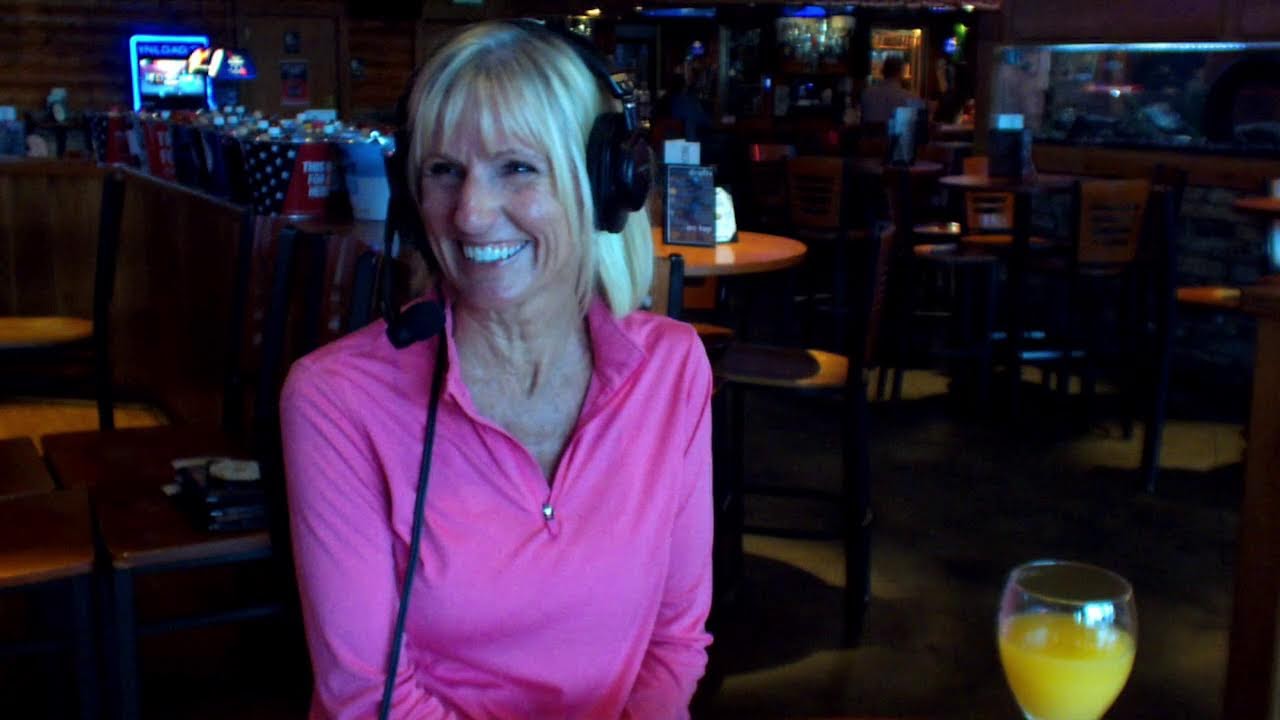
Whether we like it or not, he's the self-proclaimed governor of mid-Missouri, and he's the host of TTBS, the podcast. Since we can't shut him the hell up, here's Tom Bradley. Thank you, Nikki Garvin. Appreciate your help on the open on the podcast, and just realizing the kind of guy I am that I did not even double-check and make sure and offer our guest anything before coming on board here. And you just saw him pick up on the video, if you're watching the video. But I guess he said, did he say that he got something just now? I've got his mic turned down. Did he say he got something? He did. He got something. What'd he get? He got some water. Some water. Okay. I didn't know if he needed coffee or a drink or something to eat or maybe some bacon. Bacon would always work. We're Truman's Bar and Grill, which is the home of TTBS, the podcast, and the voice you're hearing with us this morning is our, God, I hate to call you this because I hate to call anybody this. You're my sidekick for the day. And it sounds like I'm putting somebody down when I call them a sidekick. And you're my wonderful wife of 42 years and the heartbeat in my life. You really are. Oh. Yeah, I know. But this morning, you're my sidekick. Well, this is hard for me to be here. You know how much I hate this. I hate to. You've got a drink in front of you. Is that orange juice or what is that? It's an orange juice with a kick. Well, good, because I think your deal with being on the show should be the same thing as when you're on the back of the Harley, which is you always do better with maybe a glass of wine. And then you get on board and you're relaxed and you're comfortable. And I'm worried that on the show here you wouldn't be. So getting yourself a little orange juice like that, I think is a really good idea. So good idea. Good job. Appreciate that. You're taking care of me here. All the way through. I want to give you some information behind the scenes over here. We're going to be talking with Demetrius Woods, and this is not the first time that we've been to this rodeo. Demetrius has been on the show with us several times in the past. Not the podcast, but formerly the Tom Bradley Show on radio and streaming live. And we've had some long conversations. We can't go as long today with our conversation, and I'll tell you why. Something I found out last week. We went slightly over an hour. Our goal is to go 45 minutes to an hour with the podcast each week. And it's tough to stop, because we get into some really heated stuff, like we did last week in talking about homeless people destroying people's property out there. It's a horrible conversation, and one we had to have Pamela as our guest. More details on that in a second. We went to an hour and three minutes, and we went to repost. We have the live stream that's going on YouTube. Went to repost to both Facebook and Instagram. And then we find out that there is a limit on Instagram, that on Instagram you can only give them an hour. At an hour and three, it kicked it out. But I didn't know it was going to kick that whole thing out until after all the time of uploading it. So it kind of pissed me off. I'm going to be honest. It kind of pissed me off a little bit. I saw you working on it. I knew it did. Thank you for noticing that and seeing that. So behind the scenes, a couple of things I want to mention to you before we get to a few other notes and to Demetrius, Michi as we know him. He is the real thing. The real deal. Tough. Very tough childhood. At a very young age, he was dealing drugs. And sooner or later, you're dealing drugs, and you're going to get busted for that. And he did a number of times. And he did three tours with the Missouri Department of Corrections as a prisoner. He's a father. I think he's got, I believe, five kids, something like that. We'll ask him about that. Successful business owner of several businesses over his lifetime and currently. And a member of our community. So we'll get into that. Other housekeeping notes. You can find us online at the ttbsshow.com, ttbsshow.show, I'm sorry, and the tombradleyshow.com. It's the same website. For the sake of brevity, if it helps you out a little bit, you can go to ttbs.show, if I said that right this time, and find that. Have you used that to get to the website yet, Deb? Yes, I have. You don't have to say that. Did you use Line? I just lied. I haven't done it yet. I don't even know the last time you went to the website for any reason. You don't need to. I go to your page on Facebook. On Facebook. And that's how you access whatever's going on? Well, I've gone to your… Yeah, it's been a while since I've been to the website. You go, I think, to Facebook for the show or for now for the podcast more often than I do. You walked in this morning and said, hey, did you see what somebody posted? Yes. And I said, I know. I haven't been there since the post yesterday that said Demetrius would be on today's podcast. I just get caught up with other stuff. And this morning while I was setting all this up, you checked it out on Facebook and you saw some posts. Yeah. I don't do social media. And so, no, you don't have to lie if I ask you if you've been to ttbs.show. Well, I have been to your webpage also, but I didn't go to that one. No. Well, it's the same thing. It's just that you can access it either way. The tombradleyshow.com or ttbs.show. And thank you. You're just all over the place now. I can't find you. Thank you, Ellis Bennis, who came up with a suggestion for that, and he's had a lot of advice behind the scenes. He was our sidekick last week, and he did a great job. He did. He really did. And I don't know. The show is really happening organically. It's really growing as a matter of fact, to give you an example, we've never had any music bed to bring on the guest for the podcast. And this morning I was like, well, we need something. I mean, Demetrius is a big deal. He is to me. And I'm like, I want to have, and I realized I have to have rights to whatever music bed we use to bring on the guest. Stupid copyright laws. And I started thinking about public domain music, and I'm like, that doesn't feel good. And there's other stuff going on. And then I realized, oh, I do have a tune that I have the rights to that we haven't used on this podcast that we can use from now on to bring on the guests. Sounds great. Well, it's one of my own compositions. So it was the open and closed tunage for a podcast from several years ago, Tom's World Beer Tour, which I did with Tom Bowman. So it was Tom's plural World Beer Tour. And we had a lot of fun on that. But it's my own composition and my own production, and I own all the rights to it. And anybody else can go after themselves if they think I don't. So we're going to use that as our new guest intro music. We'll try it out on Michi, and if he doesn't like it, he can tell me, but it's not going to change what's going to happen. We're still going to use it, and not only for the open, but also for the close. I think for him, I don't know if we'll use it for the close. We'll see how that goes. But when we're talking about things behind the scenes, it brings up something else that I got to get to with Tom Bowman. And that brings up, as a matter of fact, our big announcement this week. Release the hounds! As we release the hounds. I love that. I love that how, from Creekside Pet Center, and Creekside's Bed & Biscuit, and Dirty Harry's in Boonville, great friends of both of ours. Yes. And… Love the Bromas. They just lost a kitty cat recently. These are things that people go through. You've always been a cat lover. You've always had cats in your life, and in our life. And this is the first time that we have not had a cat in our lives. I think you brought a cat home before we even said, I do, to each other. Is that correct? Oh, yes, I did. And why do you say it like that? Well, you're busy all the time. I need some kind of comfort at home. Yeah. I hear what you're saying. So, I'm sorry that that happened. But you know what? You lose one pet, and then what, did they have 42 chicks hatch in one day? Yeah. Frickin' chicken math. Their cat was like 22 years old. I don't know how that cat lived to be 22 with all the other animals going on in their life. So, that cat was living with all their dogs, and horses, and turkeys, and… What else do they have? Goats? All the goats going on there? Well, it's like our bird in my daycare. It's 23 years old, and I think it lives because it thinks it's in a jungle. So, it just keeps on kicking. I got to be honest. You are on your summer break right now, and that's why you're able to be here today. And thank you for joining in. And you kind of said, I'll join in. And I was like, really? And you're doing a great job. Well, that was on wine last night. Well, you're back on the Spike Dojo this morning, and that's fine. But I'm sorry I keep losing my train of thought because I'm not used to having you on the show. I will mention to you the big announcement brought to you by Creekside Pet Center. Gosh, they do a great job. The big announcement got a little squirrely about 20 minutes ago. I was going to tell you that Tom Bowman, speaking of Tom Bowman, he was a big, big-time supporter and member of the Tom Bradley Show for all those 10 years. And I was going to announce to you this morning that Tom Bowman is going to be our guest on the show one week from today. It's not officially not going to happen, but probably by later today it will be pushed off and rescheduled. But it's not going to change the fact that I want to mention it to you that Tom Bowman, we're going to have him on to tell a really interesting chunk of his life story. And I do mean life story. From the moment he was conceived until whatever time it is that he joins us on this show. And it's going to be, and I even wrote it down, like Tom Bowman's life story, a lesson in love. I really, really mean that. He didn't say that, but I gave his appearance on TTBS, the podcast, that title. Because if you've ever thought, well, I have trouble getting along with what I've been dealt with in life, or to go along with, who is it, Stephen Stills, Love the One You're With? It's an important fact. You're going to have things in your life, and people in your life, and you choose to love them and care about them and for them and appreciate what you have, or you choose to wish you had something else. We'll get more into that when Tom's on the show. It is scheduled to be a week from today. As life and death happens, Tom posted yesterday, he lost a very, very dear friend to him. I think they met in third grade just this week. I think just yesterday he may have found out the news. And there's a good chance that he may not be with us next week as he'll be traveling for the funeral out in California. So it's tough. It's tough. Yeah, it was really sudden, I think. I don't know all the details, but we'll probably find out. Well, at approximately Tom's age, it is way, way too young. And so we're thinking about you, buddy, and we'll reschedule if we need to and work out whatever we have to. But I didn't want to, anyone who's known Tom Bowman, otherwise known as Big Gender all these years, I didn't want you to miss out on knowing we're going to have this. It could be as soon as next Thursday, or we may be pushing it off. The following week, you and I will be in St. John. There will be a podcast that week. It'll be live on the beaches right there at Cruise Bay, right? Oh, yeah, that'll be fun. Are you going to get up in the morning and come out there on the beach with us, or are you just going to… I guess we'll see. …sit over at the beach bar and enjoy one of those spiked juices like you're having now? I may still be awake from the night before. That could happen. But you and I haven't even worked out. When we go to St. John, how are we going to work out our schedule? Because it's still been horrible. How many hours did I go to bed before you last night? Oh. Two? Oh, I did, well, three hours. Three hours. We'll see how that works out in St. John. I think you were in bed by 8. Well, I may have been, and I don't know why you've got to go there. But I do want to bring up the tunage for us to bring on our guest this week. And so I have all the rights to this music, so I'm pretty sure I can bring this on. Do you recognize this? Yeah, it is. Yeah. It's upbeat. I don't think it's something you can dance to. But it is mine, so I did all the work on all the instruments on there, and I also, if you will, composed or wrote the tunage behind there. Ladies and gentlemen, I will bring to the table this morning somebody that I'm proud to call friend. And I don't know that you have to be a deeply devoted friend to refer to him by the name his friends use, but I do. I call him Mechie, ladies and gentlemen, Demetrius Woods. Good morning, Mechie. How are you? Wait a second. I'm going to bring you up over here. How are you doing? Pretty good. My mic all right? Yeah, you're good. As long as I bring it up, you're fine. Did you wake up at 7 a.m. this morning? Probably about 6, and then, you know, you toss and turn. 7 was when the man said, get up. And then you come pulling up here, and Dynamite Deb, our sidekick today, looks over and goes, oh, I think Mechie's here because a BMW 7 Series just pulled out right in front of Truman's Bar and Grill. And I said, I hope you don't mind this. I said, it probably is. And I looked down and I go, that's a dealer plate, which is weird to talk about a drug dealer driving a car that's a dealer plate. Am I right? Yeah. Am I right? We've talked a lot about your life, and we're close enough I can make jokes like that, right? Oh, yeah. I mean, I say that, but later it's going to be like, don't ever bring that up again. I think there are a lot of people, Mechie, who will be like, Tom, you're not gritty enough. You're not streetwise enough. You haven't been through the wringer enough to be able to really get into a conversation with someone like Demetrius Woods, and that may be true. I don't know. I come from a whole different world than you do, although we're both from the St. Louis metro area. Yes. What's the exact area? Not the nickname, but what's the municipality or exact area that you grew up in in the St. Louis metro? Well, kind of bilingual because my childhood was a little rougher. I was on the north side area where the Grand Water Tower is right off I-70 there at Grand and I-70. At Grand and I-70. I know the area. It's changed a lot over the years. Back in the day, I used to, even as a kid, we ran all over St. Louis, whether we were going to games at the arena for blues or seeing the Billikens basketball games or down to Bush Stadium where we watched both big red Cardinals and the St. Louis Cardinals baseball and riding by-state buses in the area. And then by the time I was 10 and 11, we were able to do bike hikes all over St. Louis, and so we did. And so the Grand Water Tower at I-70, I probably rode my bike past there as well, and that's where you grew up. Yeah. How old are you today? Forty-six. Forty-six. Seventy-nine. My time riding bikes by there was before you were even born. Really? For what that's worth. What do they call that area? Is there a nickname for that area? Well, it's the north side, North City, and the old Fallon Park area is what we became to know it as. You know, old Fallon Park is right up there. That's kind of what we surrounded as a territory or such. I don't know if we talked before. Were you a member of a gang at a young age? Yeah, and it happened, ironically, my second neighborhood of St. Louis is in North County, Breckenridge Hills, and it wasn't actually in that neighborhood when I lived in North City until I moved to the county in the early 90s. Yeah, I was joining the Rolling 60 Crips. I don't know if you know of Nipsey Hussle, a young rap artist. I do recognize the name. It was in the same neighborhood. You said again it was the what Rolling? Rolling 60 Neighborhood Crips. Neighborhood Crips. Neighborhood Crips. He's a good boy. He's so friendly. He's a good boy and girls that are hanging out with his thing. Were there girls in the gang? Oh, yeah, definitely, and in actuality, just a lightly touch on it, man, and how it got spewed over time, and now gangs, it's just a horrific thing. It turned bad, but the initial project, Crip, meant community reintegration project, and then drugs got spewed in the community, and things kind of got, you know, it was in California. Tukey Williams and those guys were taking care of women in the community, and then, you know, when drugs get involved, jealousy, things like that, it kind of went away. Law enforcement. And the money. And the money. The money. Don't forget the money. How in the world do you even explain to us the value of street drugs and in dealing? How do you put into something like all I've ever done is work for a living? How do I understand what kind of money that is? Like what were you making when you first started dealing drugs? Well, I'll tell you this just to bring it into a cold reality is imagine having nothing. No hope, no money, no water, no bread, no electricity at times, and then even if you see a $20 bill, that becomes a $200,000 bill, which is nonexistent. But we chase that, so that is the money. It becomes an illusionary, and I'm able to illustrate it now. Of course, we heard coming up it's fast money. That was a hogwash. I lived it, you know. So this is a really big thing. To get me to understand it, you've got to say, look, we were as poor as poor can be. And, Tom, you weren't. And so a $20 bill didn't mean the same thing to you that it did to us. Is that understanding this right? So that's the first part. So at that age, and you're younger than people have any clue, exactly how old were you when you started dealing drugs? I believe 12 years old, a little marijuana, and shortly after that I went into the primary, which was cocaine and crack. Is there any way to measure the difference? I mean, it's like marijuana was a couple bucks, and cocaine and crack was like now you are rolling in the money. Yeah, marijuana was a little bit at school with peers, and crack and cocaine was with adults until two, three days at a time with no sleep. And so it was, yeah, and I say that jokingly, but in real reality. That you were going two to three days without sleep, 12, 13 years old. First of the month, are you crazy? I'm living in a dope house. Wow. You mentioned before when we've had a chance to talk that one of your first clients was your dad. And I tell your story to people. I tell your story. When I get into conversations, I'm like, you know, and we talk about it, and sometimes I say his first drug customer, and sometimes it comes out his best. Was your dad your best customer too? Probably so you would say in my ignorance, because it gave me a security net. That was that go-ahead, you know, in the beginning. Now that I look back, and it gave me also security in the community. If his peers knew that this was okay, they protected me. So definitely so, in so many different facets. Then, you know, and I choose not to look at it any other way, but in a negative, because we know what that does. There are a lot of things I want to talk to you about this morning, and there will be a limit on time. And this is when I want to mention that the first time we ever talked, it was live on the air. We were on local radio. And I had control over the show, and so the owner of the radio station on the FCC didn't care how long I went. And we started talking. It's the longest nonstop interview. We took no breaks, no time checks, nothing. No sponsorships, nothing. It was an hour and 15 minutes you and I talked in that. Did you realize it was that long? Not at all. And I'm on my way here leading up to this interview just thinking of the history I could imagine. You remember what I was going through. And I'm grateful for that opportunity. But, yeah, we got real. And that's why this conversation is going to hopscotch around, and I'm not going to apologize. It's just that there are a lot of them. I want to tell you right now, yes, Demetrius has been in prison in Missouri at least three times. I know because it was the whole three-strike rule that became part of the whole conversation all of a sudden. I have no idea how many times he was arrested or anything else along those. But Demetrius, as you listen to him, and he's sharing all this information and doing it so eloquently with such articulation, you're like, this guy, he's never been. It must have been amazing to go from being a drug dealer at 12 or 13 to being a Rhodes Scholar at 18. No, that's not what happened, although you did have a great education in prison. How old were you the first time you were arrested? 14. Oh, man. 14. You were running under the radar until then. They didn't have any idea. Yeah, I guess so. Yeah, running around older guys under that blanket. I've seen the older crowd, and I figured out a way to fit in. When you were arrested the first time, was it just dropping you back off at the house, or did you go to juvenile justice, or what happened? I went to the Breckenridge Hills Police Department, and they allowed my mom and my father to sign me out that night. I didn't have to go to Clayton that time. Breckenridge Hills Police Department. It sounds like one of the nicest places you could possibly visit. Yeah, I got punched in my mouth that night. That's another story. By a police officer? Oh, yeah. And I appreciate it today. Today you do. Officer Simmons. Didn't appreciate it. You know his name. Oh, yeah. How do you know his name? He was our neighborhood officer. Man, in St. Louis, it's different. I mean, in any community, and especially if you're dedicated to the life of a tarrant like I was, we get to know each other. And now I say I appreciate him. Officer Simmons was a great part of me and the man I am today. He helped raise us boys. It's interesting and important that I stop right now and focus in on one of the reasons why I invited you on the podcast. We're talking a lot about the street-level, home-level, neighborhood-level, child-level crime in our area. When we arrest somebody for shooting at someone on the streets of Columbia, and they're 16, the path leading to this has been going on for quite a while. You know, I mean, you hear me talk about this. And when no one's around, it's you and I, and we're witnessing a story coming on TV or you're reading something online or I am, we start talking about this. I'm like, look at this crap. You hear it from me all the time. And being a mom is a different perspective than being a dad. And I don't know what it feels like for you when you hear that these kids are 12 and 13 when they're getting into trouble. How does that feel? It feels really weird. He said he was 14 when he got arrested the first time. I'm like, oh, my gosh, that's such a baby still. And all the stuff going on in Columbia and these kids that are involved, and some of them are 18 and some of them are 12, 13, 14. And I'm like, why? Michi, to give you perspective, yesterday grandkids, four of them, hanging out around the pool. And the biggest issue we had was one of them was given a Popsicle by the other grandchild, and he said, I don't want it, and went and got his own inside the house. And it wasn't a different variety. He wanted his own. Because they were in the middle of arguing. He didn't want to take it from him because he was mad at him. So he went out and got his other Popsicle. And then we, as grandparents, said, well, you don't get to have it. You've got to throw it away because you want to have that attitude. My way. And it starts early. And those kids are 11, not far. You were probably witnessing a lot of crime in your areas at that age already before you were actually running drugs and getting in trouble, right? Indeed. So our perspective is like it's really tough to figure out what's going on. But it is happening here, and that's one of the reasons I invited you to the podcast. It's like what you were going through, I know we have kids here that are going through it too, and they're going to wind up in trouble. You know, Julian Jackman, we've had him on the show a number of times, and we're going to get him on later this summer and talk about what's happening behind the scenes. He's spent time in prison as well. I was with him. You knew him in prison. Yeah, we were on the yard, JCCC. Ten years, I think, I've done with Julian. Wow. Yeah. Is it really strange to realize where you two are now? Did you ever figure you'd be in this place, you'd be able to see each other again and talk again, but you'd be so far removed from what you were doing those years ago? Never. Look, I get choked up with that, but never in a million years, man. It's astonishing. It's astonishing. Your last trip to the prison, you were supposed to be getting out in what year? I know the date, month, and year where they told it was 10-29-2029. Oh, wow. So not there yet. 10-29-2029. Yes, sir. You'd still be there, and you believed you were going to be in that whole time. No, I didn't. You didn't? No. So you were sent in, and it was that three-strike rule we had going, right? Mm-hmm. I had no parole. Nonviolent drug offenses. And all three of them that you were sent to prison were nonviolent drug offenses. Is that correct? Well, actually, when I was certified at 16, it was an assault second degree, and that was my first adult felony, and the rest were drug convictions following that. The third one was a nonviolent felony drug conviction. They said, that's it. It's your third time. You're going in with no possibility of parole, and it would be until 10-29-2029. Correct. That's a weird thing to hear today, and it's 2025. Who are you telling? You were, what year was it that you heard that? What year was that? That was 2007. Oh, my God. And so you were a man in his 20s? Yes, sir. 2007, and somebody says no parole until 2029. What were you dealing, by the way? Crack and cocaine, by that time, mainly cocaine. For those of us who aren't keeping score on crack and cocaine, is it generally the same thing? Crack, it's generally the same thing. Crack has hot water. That's the only difference. Is that a term? In scientific terms, you take a solid and turn it to a gas, and then it goes back to a solid. You have powder, and you melt it with hot water, and then once it dries, it goes back to a solid, and that's crack. So you melt it down to the purest compound, let it get hard, and that's what people were smoking. I've got to tell you, not only are you a successful businessman, and you were a successful drug dealer because you have a sense of business, but it sounds to me like you've got a pretty good chemistry degree going as well. Was that what you minored in? I made a joke the other day. I always promote. I use Facebook, Instagram, and I put some fried chicken. Oh, I'm considering selling a couple of my locations in the community. I went past my ego and put a little Facebook post up. And it's just, man, I'm tired. And I've got some good stuff going on. See, the community, once you get in there and you get to figuring it out, that's when you sell. But coming from where I come from, somebody's selling or bailing, oh, something's wrong. No, it's going right, and I'm tired. But I say that to say I made the innuendo that I was promoting my fried chicken. And I said, she's like, we need that chicken on the food trailer. I say, listen, and a nickname for kilos of cocaine is chickens. It's birds. Have you ever heard that? No, I've never heard that. Oh, wow, yeah. Stay far away from the link. But, no, that's a common lingo, and I make the joke that I've been cooking chickens my whole life. I can't stop now. That is funny. You know, I just switched it, man, and we sell some chicken here. And you did back in the day as well. Yeah. Was there a time when you got out of prison that you didn't make jokes about this? Because you're like, I don't want to even get near the jokes on it. Oh, man, you better believe it, especially in prison. I was one of the guys, and a lot of the inmates took it as arrogance or whatever, because I was an upper guy, fortunately. You know, in my community, but a small guy in reality, and I remember that. But I would never talk about drugs. That's the number one rule. You don't do that. That's a federal case, and they would think that I'm being arrogant. But, no, in reality, that was something I wasn't comfortable with doing in the first place. I was just becoming another character for overall goals, you know. So let me, I want to try to understand this. 2007, you go in for the third time. Before the sentencing, you had not made up your mind that you were going to clean it up and walk a new path. You hadn't decided that. Is that correct? No. Actually, my reality, man, that's what keeps me straight. It's actually opposite. On the ride back coming through Lafayette County, me and Raymond Brown, one of my best friends, bigger brother figure, co-defendant, who was driving the vehicle, were laughing and kind of joking about this being the last rodeo. I was done. I had made a run in about a month, and he wanted to make one last run. This was my brother, you know, and I had to connect, so I had to, and I made a little money off of it. Of course, greed kicked in. I'm a hustler, and I'm greedy, and we were laughing. Yeah, that was the end reality. And that's the one you were picked up on, 20 pounds in the car with you guys running across the stand. We were, and Raymond knows, and God, our witness who saved our lives, probably with that traffic stop, but God knows we were kind of laughing and joking about opening a clothing store because I had one in Columbia. We were going to open one in North County. Was the one you had in Columbia legitimate? Yes, in Parquet Plaza. It wasn't a place you stopped in for cocaine. It was a place you actually bought clothing. Better not. Even as a kid, I had a business sense, and the community knows this. There's probably people listening that are laughing, like, I bought dope at his store. You couldn't buy dope at nighttime for me. If people walked in there and they said, I'm looking for something in white, it wouldn't be cocaine. And is there a rule? What's the rule about whites on Labor Day? What is it? You're not supposed to wear white after Labor Day. After Labor Day. Or before Memorial Day. It's stupid. Like those two things. It's old school. Meachie, is the same rule applied to cocaine? No, it doesn't. Never. It's always in season? Always in season. Until now. You say it's you, your brother, and God know the truth on this thing. Yes. And I'm sure there are a lot of people like, bullshit, these guys would have done another drug deal if there was enough money two weeks after that run, if that had been the case. But you guys really believe that was the last one? Oh, yeah. And then did you look at them? And when you were busted, you looked at them and you said, dude, you really had to say one more time, didn't you? Like, really? There's only two places a drug dealer is going to go. It's going to be going to jail or it's going to be going to the grave. To the ground, yeah. How many friends dealing drugs did you see go to the ground or to go to prison in your life? You can't even count. 95%. That's just the reality of it. And I like to say, knowing it, it doesn't happen. I was talking to a good friend here, Darrell Brown. He owns a crustacean seafood downtown. And me and Darrell are great friends. We've come from the same family type upbringing. We were just, man, we had to laugh about it. He keeps it in reality when he pulls up on me. He's like, man, we got to talk. We got to spend time together because we don't make it. And, man, we here. You know, I'm on Broadway and 9th and he's right up the street on 9th Street. And, man, we used to be stuck in Douglas Park, you know. So we have to illustrate that. What is it about you guys being such tremendous business people and business owners? How does that – I mean, it's not because of the drug dealing, although I'm sure you learned how to earn a buck, even if it was illegal, how to earn it, how to care, how to watch your business and so on. But you guys have it instilled in you. Is it because you came from nothing and you're willing to work harder than other people around you? Of course, that's a prominent ingredient. But looking at it, because some days I'll tell you the truth, I want to throw this hat for as I can. Yeah, yeah. You know, but in reality, I think it comes from a place of not having leadership. So once we're able to be in a position of leadership or live in a life to strive to have that, to be that, we take it and run with it. And then being able to take direction. We were directed by some false narratives before. So I think that's a bit of what drives guys like us to be entrepreneurs. Well, I think that's a really interesting point, then, to jump back into what I brought up before. You said you didn't have any leadership when you were growing up. And if you were to point to why, can you give me a reason or three reasons as to, like, what your life was like? I had leadership. I know I didn't. I can tell you all the areas I had it from. Can you tell me why you didn't or where it was that you didn't have leadership? Well, and that's what I wanted to do, correct that statement. Of course, it was always leadership. I chose the wrong leadership directly within my household or my community. I didn't have a physical person. I had figures, John F. Kennedy, you know, the Obamas, Jay-Z, you know, far away. But, yeah, not having that direct around. And we long for that. We long for it. We come from a mom. We long for a man to teach us how to chop wood, how to throw a punch. And when you don't have those things and then you become a man, you notice the void and the result. So then it becomes a strive to be that and implement that, I believe, if that makes sense. Yeah, yeah, but you haven't been taught it by someone else. Let's go back. Well, it's the lack thereof, that statement. Yeah. The lack thereof, man, takes control. I want to go back to Julian Jackman. As we talk about this and back to your prison days, you guys knew each other there. He was putting on, I don't know what he called classes, courses, a brotherhood, some camaraderie going on there within the prison. And he was asking people to reach out for what they knew, to trust him, to trust themselves and a better gut instinct and become something and lean on each other. Were you part of his little classes and entourage there? Definitely so. Probably more extensive. I had graduated. We were there in Jefferson City Correctional Center. And me and Julian had facilitated classes, restorative justice, things of that sort. And I think I was a high step teacher to G.D. But I graduated the intensive therapeutic community, a year-long drug treatment program that was volunteer with all maximum security inmates. And peer ran for 80% of the purpose. So definitely that environment. Me and Julian are kind of self-rehabilitated, self-taught. And you have to do that, man. That's life. Yeah, it is for you guys now. But when we go and look at 9, 10, 13, 15-year-olds, they don't have the ability to pull themselves up out of where they are. So what the hell can we possibly do for them today here locally? Well, and that brings one thing. And my walk every day, man, is to keep being me, keep doing what I'm doing, make sure that I make the best decision. It's not as hard at all as it used to be. And then wake up at 7 in the morning and make it to the show where I can illustrate and be illustrated where if it's just one person that's paying attention, you change a life. I step out on Broadway and I say, hey, guys, this is going to be the result if you keep doing this. And they look at me. How do they know that you're not full of shit? God. That's where I start, honestly. I don't know. And then I go and I say we have this terminology in the hood. And, man, this is deep for me because it's a real thing and it's that I'm real. You have this thing in the hood and they say, is he real? Is he a real OG? And they can they can tell it. The evidence is there, man. Me and my co-defendant are still best friends. When I tell the kids don't do that, when they go around the corner, they can't find me doing that because I live one way now. I still look a certain way. I still I don't change up or anything. I'm still Meachie. But the evidence is there. I've done some horrible things and I made my mind up and I grew up and now I illustrate. And you have to tell them when you're talking to them what some of those horrible things are. Oh, yes. Here's how I grew up. Some of them don't. Not not to really cut you off, but you are correct. Let's not be just profound that it goes smoothly because I have a rule in my bodega. There's no hoods and no masks that they wear nowadays. And I have some kids that tell me, what do you mean no hood? It's my hoodie. And I have to remind them that I pay the rent there. Yeah. And it's rules to follow. And then I settle it down and I'm not aggressive with it. I say, brother, it's all it's rules in life. But they could think that you've given in and you've sold out and now you're working for the man. And you're in there just continuing to preach the stuff. Because I think all of us as we grow up, the kids, they they stop thinking, Deb, that we have any sense at all. They're like, you don't know what you're talking about. It's like, no, no, no. I was there. I remember being 12 and having acne and going, oh, my God, what am I going to do? And all these things that go through our life. And kids are like, you don't know. You're an adult. It's been a thousand years since you were young. And life is different today. Right. Right. Absolutely. How is it until Natalie, who is our only granddaughter and she's nine, how is it until she looks at you and says, Grammy, you have no idea what's going on in high school. She'll be, what, 14 and she's going to look at you and be like, you have no idea. Well, our kids were saying that to us. Right. So how in the hell would grandma and grandpa know? Right. There's no way that's going to work. But I think so. They do call you on this, but you've got to prove to them you really do know it. And you probably don't catch every one of them. You said if you get one, it makes a difference. A few weeks ago, we talked about problems in Columbia. Big Brothers, Big Sisters was brought up as being an incredible effort and doing a great job. And I had Anne, who runs the shop, reach out to me later with an email and say, you guys were talking about this. We appreciate it. Furthermore, we got a new big brother out of that conversation. And I've shared that with some people and I've been like, they have 100. They need 170 altogether. Every single one makes a difference that they get another big in there. And I'm so happy to hear that. Of course, we need 69 now, more now. And we probably lost another one through attrition. And those things happen. But I want to share with you the point that she made, which is important for all of us to know, which is out of the kids that are using Big Brothers, Big Sisters, those that have bigs right now in their life, not one of them has a problem going on with juvenile justice. That's not one out of 100 kids. We need to do that for another 100 and another 100 and another 100. I believe. You betcha. When you look at this and you look at our community, and time is flying as we're talking, what can we do? What can Deb and I do? What can other people out here do to help to take some of what you know and some of what's happening on these streets with these kids and with these teenagers and 18-year-olds? What can we do? Well, one thing, Ty, I was thinking earlier on my way here, and I don't know. I like bringing stuff in perspective, and I know how you make light of our relationship, make light of our first interview and things of that sort. And like I said earlier, remember what I was going through then. And this gives me the opportunity, and I don't know, not really a sentimental guy, but getting older, man, and I like to bring stuff in reality. I'm losing friends. You know what I mean? You come through at a time where you played a part, whether it was little, big. I consider it big being on your platform where I was fighting for my life. In what way? Like how? How were you fighting for your life at that point? I lost my appeal that had me free for two years on the no parole, and I was faced with going back to do nine calendar years in maximum security prison. Coming from a citizen, which you met, and I was, you know, working, providing jobs, and we was faced with that being depleted from our community in Boone County, Missouri, St. Louis, and your platform played a part in what we have today. And today, as you know, I'm no longer a felon even. And that's an even better representation for our community. Do you know what I tell the kids now and how much respect they give me, knowing that I have my rights to carry a firearm, I have my rights to vote, I have my rights to run for a local office? And this is coming from unbelievable. Remember, I was a felon since 14. Yeah. So I say all that. Since, again, the age of 14, not 2014, the age of 14 years old. Quite some time. And I say that to say this gives me the chance as a man to give you your flowers and appreciation, but you're already doing a part. Having me on your platform, how many of your viewers would think that I would be, that you would be my friend, that Sheree Relch would be a great friend? You know, you guys helped save my life, man. And now we're saving lives, me being back on the show today. Yeah, yeah. We're still doing it. That is the thing. And I know that. And you know that now as well. But I sure as hell didn't know that I was making a difference in your life. You better believe it. I thought it was about everybody else that might hear it, and me. There's not a lot of people I wake up at 7 a.m. for now. Well, Ben, I run bodegas, honestly, putting inventory. My kid gets off the highway at midnight with a truckload of sodas, and we got some new Kool-Aid sodas. I can't wait to make a post today. I'm sorry, the brand Kool-Aid? The brand Kool-Aid. Kool-Aid. And my son shows up with them. You mean you open it in a can? It's a bottle. It's a glass bottle. I'm going to post them. Is it carbonated? It's carbonated. It's amazing. But, like, seven flavors. Oh, God. That is crazy. Isn't that something we've got to have? Oh, man. But, yeah, I went to sleep at like 2 a.m., and I'm up. But it's because we are doing the work. I know what your platform gives me the ability to do. I have so many people that don't believe that me and you would be friends, that I would be here three times and count. We are friends. You took care of the tinting on Deb's BMW's windows. And someday I'll be driving. Are you getting that car over there? I'm being convinced. Is it Josh at BMW? Yeah, Josh. I call him Joshy Washy. One of these days I will have a 7 Series, and then you and I are just going to drive down the highway side by side. And we might drive 80 miles an hour, or we may drive 40 and back up traffic, because we're just going to be sitting there just cruising down. Doing the podcast. Tom, I don't think you've ever drove 80 miles an hour. You know, I hit 78 last week. Get a 7 Series. He won't even know it. Yeah, exactly. We're not going to have time to go into a lot with your relationship with Julian Jackman or what he's doing today. But I promise you and everyone else I will have Julian on probably August. It might be more like September. We're working on mapping out our guests into the future. But what he's doing is amazing. What you're doing, even if all you do is live your life, you're doing it. You're doing it, Peter. You're doing it. You're making it happen, dude. And that's what I want to tell you is that we see it. We see this happening. But we do want more from you. We want you to teach us how to give to those who need it. Because we have the ability. There are a lot of people like me that have the time, the wherewithal, the concern, the caring, and the money to get involved. Yes, sir. We want to get involved. And I think people can see that in my eyes that I really want to do well. But I'm not going to be able to walk up to kids on the corner of Broadway. You can. Just come to 9th Street. I control the corner pretty much. That's what I'm going to need to bring that along. What you're doing is amazing. I know it's working because at 47, is that what you said? 46. 46. I'm already dating you older. At 46, you're already like, man, I'm getting tired. Yeah. That's what happens to successful business people is you go, wow, I'm getting tired. You've got Woods Auto Spa on the business. That's still doing well? Yeah, pretty well, man. It must be hurt right now. I bet. I bet. I got to ask you something else before we get out of here, which is I think when you were on the show the very first time, I don't think recreational marijuana was legalized yet. No, not at that time. It might have been brought up possibly, and we might have chatted about it. But what do you realize? Isn't it weird now, one of those things that you were dealing as a kid, that it's just everywhere? Dude, I can't drive down the street with the windows open without it just puffing into my car. It's freaking amazing. It's scary, though, for me. I work a program, being honest, man. Let's not be too cool or hip because I do work a 12-step personal program. And that's just, for me, my drug dealing, you know, hustling, and that was my Achilles. That was my drug. And then my anger now from being in MACs, being around dangerous guys, having a mentality that has kind of creeped into my life. So I work a program because I'm not going back to prison. A felony won't be behind my name. You mentioned violence and that anger that's in there. Do you feel that rage up inside you sometime? You're like, oh, man, that's that thing. And I'm sure it happened while you were in probably a couple times a day. Do you feel that come around now, and how do you deal with that? You better believe it. It comes around more than ever. And I talk about it. That's why I brought it up. I take deep breaths. You hear me inhale. It's real. You know, mental health is real. And I'm one of the gifted people. I have never taken medication, but I acknowledge it now. But you mean more than ever, like more now than when you were in prison? You better believe it. And it's harder on you? Our communities change. People's changed. And, yes, it's harder on me. And my confidence has grown. So, back before when it was danger and maybe I'd run or I'd go the other way or scared, now I'm like, no, you're not going to do that to me. You know, and that's that crazy kind of, you know, I call it crazy. Isn't that something? Is it more difficult for you this morning to sit here and open up to us, or is it therapeutic and make you feel better? Were you dreading coming here this morning or were you like, oh, this will be good? How does that feel to you? I did 80. No, it's very therapeutic, man. That I cannot explain. This is a part of my program. This is a 12-step right now that I'm doing with you, and it's very therapeutic for me and the rest of the addicts who look forward to working a program or who do work a program. So very therapeutic. I can't put it into words. If it helps out at all and you want to come by, you don't have a 7 Series yet. You've got a Mercedes. Is that right? Yes, sir. What model? 5 Series, 550. If it helps out, and I'm really doing this for you, Michi, I want you to know that, that if it helps out at all and you want to come by in the 5 Series BMW or you want to come by in the 7 Series, whatever it is, the Benz, the BMW, just come on by and pick me up, and we'll go ride around and just talk. You betcha. And if you want to let me drive so that you can relax. Relax. Get to experience it. Well, I want to tell you Happy Father's Day, man. I took this as a pleasure, and Happy Father's Day to our town. I do feel like I'm kind of a father of Como. In some sort, it's a lot of us, and like you said, we have to be together and we have to be a team and know that we all make a difference, and you do make a difference. That is really something, man. Thank you. We need you. We need you here. Thank you. I'm glad. I'm staying. Good. Happy Father's Day to you. By the way, I mentioned earlier, is it five? How many kids do you have? Six. Six kids. I got a new 2-year-old running around. Oh, my gosh. At 2 a.m., waiting on me, man. And what about grandkids? Oh, man, they're counting. They're going up every day. Okay, here we go. I'm at six. Well, seven. Oh, my gosh. Seven grand. Isn't that amazing? Michi, thank you, man. Thank you. What an amazing story. And, Deb, I know we only have so much time to sit here and ask questions and listen and talk about it during this podcast. The time flew already. Yeah. We got to start bailing out of this. Let's have Michi back again. I say let's like you're the sidekick from now on. No. I think there's no reason you said yes is because you knew that you were going to go back at the end of your summer break into childcare, and I won't have you. That's true. Damn it. Damn it anyway. Before we get out of here, we got to take care of something else, and that is keeping your eye on the crap. I don't have an intro for this yet. I will. Probably by next week we'll be back here at Truman's Bar and Grill, and the following we will be on the beaches of St. John. Keeping your eye on the crap, I think you're going to appreciate this one. Keeping your eye on the crap brought to you by Family Focus Eye Care, famfocuseye.com. If you can't see the crap coming, it's going to smack you in the head. It's going to knock you down. You'll never be able to get back up, and there's a lot of crap out there. And this crap that I'm going to talk to you about brought to you by Family Focus Eye Care. And by the way, they take care of my eyes. People don't know. I wear contacts every day. I sleep in them. I get up the next day with them. I keep them in for weeks at a time. These are so comfortable, and thank you, Dr. Rich at Family Focus Eye Care, for taking care of me. Keeping your eye on the crap. Guess what I'm going to bring up? I-70 between Columbia and Kingdom City. God be with us. That is the most hell-on-earth drive right now that you can possibly imagine in both directions. Am I right? Yes. I just have to close my eyes. There's no way I can. You do not want me in the car. We took a trip to say goodbye to a dear friend of the family. Kay is someone that I grew up with. My parents really grew up with her. But she was a dear, dear friend, and very difficult because my parents and Kay and Greg, they're good friends. They all grew up together. Kay is the last of those four, Hope, Pat, Greg, and Kay, that was still with us. And so it's tough to say goodbye to her and tougher yet to realize, oh, that's the end of that foursome. Now, if you believe in a hereafter, you're probably going to say, well, they're all hanging out together today. And I sure hope that that's the case. But we're on our way to a funeral in St. Louis, and we go down I-70. I drove there and back in your BMW. And I drove there. Good God, that highway between Kingdom City and Columbia with those lanes narrowed up and the crap going on. And what about today's truck drivers? Oh, yeah, they're really bad. That's the crap out there right now, and I'm bringing it up. I know those are a lot of other things I could complain about. The real thing I can complain about on a government decision-making level or the lack of decision, they waited. I bitched about this in the car with you right there. I said they waited way too long to do something about I-70. There's way too much traffic and way too many semis that are on that highway to be going through this now. They should have bypassed several areas of I-70 10, 15, 20 years ago. And instead of building those bypasses and creating a better idea for more thoroughfare across the state, they have saddled us with living through this expansion. When they finish and get three lanes from St. Louis all the way to Kansas City on I-70 across the entire Show-Me State, it will already be full. And I have no idea how many years are going to go by before they start making a decision on what to do from that point forward. That decision should already be in the book, so I'm sharing that with you. Keeping an eye on the crap along with family-focused eye care. Also on housekeeping behind the scenes on the technical side, Deb, you did the switcher work with the video last week, and you did a great job. I had no idea what I was doing. You asked if there was a monitor so you could see what you're doing, and I was like, no, no, no, no. We're coming in short on the dollar. You don't get to have that at all. But someday there will be a monitor sitting up here, and you'll be able to see the switching. When that day comes, would you like to be invited back to do the switching for us? We'll see. Would you like to? You pay me a mimosas. We'll see. Would you like to come back and be a sidekick again at some point? Maybe. Do I have to earn that? Well, that's a nice bonus. I don't know what I'm going to do in order to earn that, but I'll see what I can do. I need to bring along and start bringing up our tunage for the show closed, because if I go another two minutes, Instagram won't take the feed, so I've got to stop recording. Thank you for being here. You're welcome. We're going to have breakfast now? Yes. All right. And then we don't have any grandkids until this afternoon. Correct. I'll meet you back at the house. All righty, then. We've got to go. Oh, and you said last week that you felt bad that I didn't have my standard remark at the end of the show, so I will throw that in there now. We've got to roll, my friends. Please live this day as if it were your last. I say to you, hookah hey.