
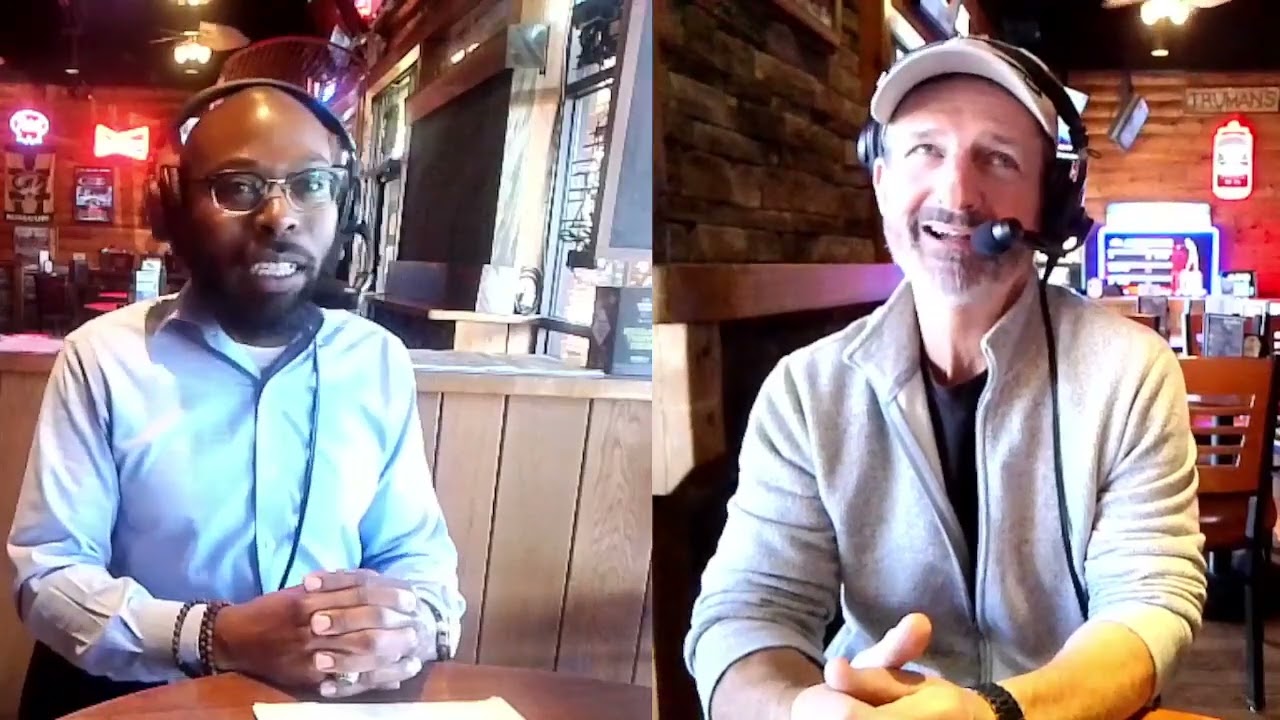
After months of fighting it, yeah, we gave way, gave in, and now officially it is TTBS, the podcast. And honestly, I got to be honest, I mean, just to put it out there, I'm actually starting to feel comfortable with the whole idea. But I met some buddies yesterday and they were like, so you gave in, so it is an actual podcast now. And I said, yeah, it actually is. I want to thank those who have been getting a pitchfork behind me and poking me and shoving me, including Chris Conrad, who has done a great job behind the scenes of saying, you know what you need to do. And thank you. Thank you, Chris. And sometimes you got to coax people, sometimes you got to pull them, sometimes you got to beat the crap out of them to get them to understand. But I'm there. Ellis Bennis, Floating Axe Designs, Web Designs also, thank you, Ellis, for being there as we reformulate what we're doing and the changes are happening. So officially getting underway with things like we talked about with YouTube and possibly live audio streaming, the fact that this is first and foremost audio and then there's video available. And so it is. I mean, look, I grew up with radio. That's what I did for 42 years. So we will continue on with the audio being the number one and that means a podcast. And so, yes, it'll be available on all the platforms where you find and listen to your favorite podcasts. So more housekeeping coming up over time. We'll give you information on that. But...
After months of fighting it, yeah, we gave way, gave in, and now officially it is TTBS, the podcast. And honestly, I got to be honest, I mean, just to put it out there, I'm actually starting to feel comfortable with the whole idea. But I met some buddies yesterday and they were like, so you gave in, so it is an actual podcast now. And I said, yeah, it actually is. I want to thank those who have been getting a pitchfork behind me and poking me and shoving me, including Chris Conrad, who has done a great job behind the scenes of saying, you know what you need to do. And thank you. Thank you, Chris. And sometimes you got to coax people, sometimes you got to pull them, sometimes you got to beat the crap out of them to get them to understand. But I'm there. Ellis Bennis, Floating Axe Designs, Web Designs also, thank you, Ellis, for being there as we reformulate what we're doing and the changes are happening. So officially getting underway with things like we talked about with YouTube and possibly live audio streaming, the fact that this is first and foremost audio and then there's video available. And so it is. I mean, look, I grew up with radio. That's what I did for 42 years. So we will continue on with the audio being the number one and that means a podcast. And so, yes, it'll be available on all the platforms where you find and listen to your favorite podcasts. So more housekeeping coming up over time. We'll give you information on that. But I think you want to follow us on Facebook. We'll be on the other social media outlets as well. And an email blasts, which we haven't talked about for years, but we'll be sending out some of those coming up. It's an exciting time. And you know what's really exciting? Is that one 45-minute or so podcast episode a week is nothing like three hours of daily radio five days a week. So I think I can handle this. I think I can work with this. Oh, oh, there is an event coming up this weekend. And thank you, Reed Hickam, for bringing it up to my attention, but I don't have it in front of me. There's a parade. There's a parade for families of those heroes that we've lost in defending our freedoms and battling for the United States. And more details coming up. If I don't have it this morning, I'll get it posted on Facebook later this week. I want to take the time now to welcome our guest to the show. You know, I did not give you, DeMarcus, any kind of a warning about what these questions would be like. Did I? Not at all. Ladies and gentlemen, DeMarcus Thomas Brown, administrator of the Office of Violence Prevention in Columbia. That's a brand new office. It is. You're not brand new. You've been around for a while. A little bit. A little bit. I want to establish a few things with you. Number one, you know a lot of people at the Columbia Police Department. Mm hmm. Yep. And you're a chaplain. Are you a chaplain for A or the chaplain for the CPD? I was a chaplain under Pastor Jeremy Risner from C2. He's actually the head chaplain. And if anybody is interested, we need as many chaplains as people want to serve. Really? For pastor. Oh yeah. Yeah. Jeremy's been there for a long time and doing a fantastic job. Give me an idea of what a chaplain with the CPD does. Yeah. So a chaplain, as long as you're backed by like, you know, they don't want any rogue people coming in. As long as you're backed by a church and he can, there's like places where he can get that accountability factor established. What a chaplain does is we do, you know, the officers can call us to do death notifications. They can call us to intervene and be a liaison with the community so they can get back on the next call. And we can be there if there's, you know, a handholding needs to go on with the family or just information and working in that. We're there to take the weight off. And I say for me, was there to take the weight off the officers so they can get back to doing what only they can do. Because a cop, a cop can't be in the middle of an investigation and, and tremendously consoling a family at the same time. Exactly. And there's probably more of that going on than we need, which is one of the reasons we needed to talk to you. Yes sir. And get this out. But let me ask, did you, did you leave the position of chaplain or a chaplain with the CPD because of the new position? Yes. That's, um, that was a conversation and, um, just, I really appreciate Jeremy's, uh, foresight on that. We don't want, the thing with being a chaplain is as a, as a pastor, uh, we, we aren't able to be subpoenaed. We're not, you know, that's, that's client privilege there. And so the officers can say about anything they want to a chaplain and it's not going anywhere. Well, with me working in the city manager's office, that's too close of a degree. And so we don't want the officers having any kind of thought that they can't be share freely and utilize that resource. You don't get that privilege on this podcast because, because first of all, I'll tell people what you said and they're going to hear it for themselves as well. So you operate in the city manager's office. Is that the, is that the, the umbrella of how it works? The office of violence protection. Well, we didn't talk about before this, DeMarcus, and thank you for agreeing to be on the, on the show. We didn't talk about the fact that I'm not a big believer in this office. Okay. And I, and I want to put it out there and I think there's probably others like me. I don't, I'm going to start this off saying there's a lot of us who feel there might be another person or two in town that feels the same way I do that. Like, we're not sure if this will work. And what happened last Sunday with the shooting of McDonald's on knife on good God. And I want to say, I'm sorry, I won't mention you guys by name to the owners of that McDonald's of the franchisees of that McDonald's. I know them personally. They are wonderful people, a great family in our community, supporting members of everything we do. And running McDonald's is like running any other business. It's a lot of work and no business is looking for a chance to maybe have the crap going on with them today that McDonald's had on Sunday. So we have a deadly shooting in a parking lot. It's horrible. It's stupid. It's unnecessary. It's a lot of other words that I can use to describe it, which are fairly negative, right? You were quoted in some media outlets as making some comments about that. So I've got a few things I want to ask you about. Okay. First of all, do you, are you privy to some of the details behind the scenes with the Columbia police department? Because they only give us small tidbits of information and they've been doing that for a number of years. Are you getting more information than we are because of your position? No. No. Police business is police business. And so, um, when folks ask me about anything, as far as investigation on what, what police have going on, that's their business. Uh, they're going to have to ask, I know they have, uh, people who talk to media and things like that, uh, set up at the Columbia police department. I'm not getting more information from them. Um, I, a lot of my information and what I'm tasked with dealing with is the community. And so, as you know, I mean, you have a podcast, the community talks, people talk, things go on and that information comes down. Can I cross and, and ask Jill, Hey, this is something that we've been getting. Yes. Jill, uh, chief Flutie and, um, and even, uh, Matt, if I, if there's something I got as a, Hey, this may be helpful to y'all, but again, it's community information, so it may not be helpful. That's about the depth of where that goes. We need to understand, because when you said these things to the media this week, it carries a lot of weight now. When I hear you talking about being a chaplain with a CPD, I get a better feel of maybe what your background, your feelings are, your feeling for purpose in this life, what it is. But this new position is carrying weight. So when you say something, they write it down, they record it, they share it, and people start quoting what you said. And do you, cause there was a feeling out there. Do you feel like your office can prevent this level of violence from happening on our streets? So what happened at McDonald's, we can bring attention to the cares and the concerns that purport and that will be, um, leading to levels of violence like this. And so talking about trauma helps educate people to know what they're dealing with. It educates me because I'm paying attention, but what's it going to do for somebody out there that's prone to road rage, pulling off the road and pulling out a weapon and starting to shoot somebody? How are we going to prevent that from happening? Well, if they don't know there's resources and there's help available, then you just keep running in the same cycle. And so they even know what's available to disrupt the cycle of road rage. I mean, we all get a little heated if someone pulls out in front of us and we're the only car there and there was no cars behind us. It was like, you could have waited, you know, we all get the, but, but to pull out a weapon, that means you got triggered somewhere. And so it's like seeing someone who can't walk two feet and they're winded. You might need to go get checked out. You know what I mean? Like that, that's, that's, that's concerning. And then as, as just as citizens to understand that we have places we can go get checked out and that that's concerning, I think that elevates the education there and draws that people to services. I don't doubt that you're an intelligent and caring person. I don't doubt that your experience leading up to the point that we're sitting here today is a lot more about some of these issues than I've ever been involved in. All right. So I've got to give you, I'm going to go ahead and say that the decision to put you in as administrator of this new office, let's just say it was a good idea that you're the right person. Okay. So what exactly are we trying to do? And when you came out and said some of the comments this week to the media, I feel like it was almost as if this person could be predisposed, not you, the shooter. I'm sorry. There were apparently possibly two shooters. I'm still piecing together. There's a lot of speculation. There's a lot of assumptions being made because the CPD has not given us a full report yet. These folks may have some trauma in their life. They haven't taken care of some issues going on. They haven't taken care of, like you said, and maybe if they had taken care of that, this wouldn't have happened. How the hell do we figure that out before, during, and after? The way you figure that out is first off, everybody has had trauma. If you look at trauma, trauma-informed care is at the center of substance use disorder. You look at the DMH qualifications of it, this is at the center of care itself. Trauma, you cannot arrest your way out of trauma, you cannot just overtly treat your way out of trauma. It has to be understood. And so when babies come out of the birth canal, they get trauma. So if you go to a chiropractor, they're going to tell you that when the babies come out, they get birthed into the world with trauma. Now is that life-ending? No. There can be compounding factors that happen that can elevate and escalate that level of trauma where they need care. And so the understanding in this situation, if that person understands that they have triggers that are untreated and that they need, then having a resource to go to. And so it's a collaboration of understanding and saying, hey, you have resources you can go to that are available to you so that you're not pulling out a gun and shooting somebody in a drive-thru. I will tell you that I'm glad to hear some of the words that you used there because some people have said to me this week, we've all had trauma. I heard somebody else say, we've all had PTSD. And I'm like, well, I mean, if you want to make it a lot of gray, if there's a scale of one to a hundred, my PTSD is probably somewhere near about a 0.05. But yeah, everybody's had trauma. I like your understanding of that, but how in the hell do we spend money on you and the office itself? And I don't know if you're going to be the one deciding on the allocation, but is it true we have about a half a million dollars a year we're going to spend with some of the nonprofits in our area through your office? Is that correct? So there's a half a million dollar budget to fund and partner with other agencies to fund the gaps. We're not just dumping money into, oh, someone's out here working. Let's just give them some money. No, it's to fund the gaps because what we understand, Columbia's resource rich. We've got a lot of resources. We've got community-based organizations. We got service organizations working in tandem, but we have gaps. When you look at young people, we have gaps. And so then in order to entice organizations to be able to spread what they do across those gaps, we have to come with a partnership. And so my office is a collaborative effort to get first people to talk to one another because you've got different services don't even know what each other's offering and they're in the same field. If you were not hired by the city, if you were just a guy and you were dedicating your life to this, and I don't know if you'd be making money somehow or maybe you'd be living off the wealth of your grandparents, I don't know. But if you were a guy talking about this, you and I would have a great conversation. It really irks me the city started this office because I feel like when the city gets involved in something, I want my dollars to give me a return. And I feel like there's way too many soft gray areas in this that I'm not going to see return on this thing. That's what I'm worried about. That's going to be tough for you to hear somebody say that when part of those dollars are your salary. Not at all. I didn't get into this for a salary. And so they are paying you. What's the annual on your on your income? They can sunshine that. And so, yeah, I'm good. No, you're not going to tell me. No, not at all. They can sunshine. That's what I think. I think I've seen it. Five thousand five hundred a year. You can say that. But you can tell me now, because in general, you know, you walk down the store down the street and you ask somebody what they get paid. They got to tell you that. I'm not going to tell you. OK, then. So but if you look at at at what this office does and what what I do, it's like the return on investment. You can. This is not a novel concept. And if crime can drop 16.89 percent in our community, what's that what's the ROI for our businesses? Oh, my God. R.O.I. for you. We're down violent crime, approximately 17 percent. And I'm throwing you a barbecue out here. We're having a live music and you can name the type of music you want to hear. You can say pork or brisket. I'll go brisket. Yes, sir. Yes, I do. I want some brisket. But I don't I don't I don't know how we're going to be able to. There are other cities that have offices of violence prevention. Yeah. Did you work in one of those? You know what? I've been able to communicate with the Office of Violence Prevention, those in St. Louis, been able to look at the model in Kansas City, actually been able to talk to one of the consultants who was working with the model in Kansas City, which is a superb model, by the way. Both of them are doing well. Kansas City, just a collaborative effort across counties is just un unheralded. And then even here, what people don't realize is between 20, 2022 and 23, we had a 16.89 percent drop in violent crime. Again, those years were what? Two thousand twenty two to twenty three. OK, we had it with Columbia had the national was only three percent. Columbia went down 16.89 percent. Now, what people don't maybe don't realize is that in 2016, 17 and 18, I was working intrinsically and with other groups into the strategic areas that were lined out then. And some of that flow that that prevention is five to 10 years out. Some of the stuff that we were doing then paid off in twenty, twenty two and twenty twenty three. The problem is, do we lose that? Oh, yeah. When did we stop doing that? When there was pulled when Glasscock got into office, the city manager, he pulled a lot of those a lot of those functions. We lost the the community leaders. We lost the strategic areas. We lost the the police officers that were in those areas. You've been plugged into this for years and twenty sixteen since twenty sixteen. And you know all about these things. Yes. Did you have the ear of Mayor Barbara Buffalo when she suggested that we open up this office? Had you been talking to her behind the scenes about this? Nope, not at all. Matter of fact, what I was talking to Mayor Barbara Buffalo about was what we when we are dealing with Missouri Foundation for Health. So Missouri Foundation for Health has been working in Columbia because they realize what what we have. Either we you know, we could have a terrible future or we can work with some preventative nature. So firearm injury and death has gotten the attention of Missouri Foundation for Health. So they've been working in Columbia. I've been a part of that think tank in that group where we've been working with community based organizations and service organizations saying, how do we make sure we can curb the violence that's going on in Columbia so that it's a great place for everyone to live, work, learn and play? And so I was talking to her saying, hey, why why aren't more of our our governing entities involved in these conversations? Because for me, that's staying power, right? A community based organization or service organization can close their doors tomorrow and then this goes with them. But whether it's county or city, they can hold that in tandem and then work around that and it has staying power. And I've seen what happened in 2016 when things get pulled and we see the plummet of services and we see the lifting of crime. Oh, we have so much to talk about. Have you had a conversation in with media this deep in this reel yet? And tell me what media it was. So I don't know who was at the Let's Talk local. That sounds like something you did not get this deep into. I'm telling you, I did a whole it was about 45 minutes to an hour presentation. You were speaking, though. Yeah, I was speaking. But I need people to ask questions like I'm asking right now. They ask questions. I think we have recorded it. We have a lot of citizens that really do want to change and they really do want to be involved, but they need to believe in what's going on. And I don't know that a lot of people believe in this. Now, yesterday I was out in some golf balls at the club at Old Hawthorne. And by the way, I was driving very well, just knocking around. I love the club at Old Hawthorne. And I'm out there and I looked around. And remember, it was sunny like it is now. And there was a real strong breeze coming around, which, by the way, was at my back. That's why my drives were going so far. I'm just going to let you know. So I'm out there and I looked around for a moment. I thought to myself, there is no violent crime happening around us right here. But I guarantee you, everybody out there on the driving range, pulling in, getting ready to play golf out there at the club, it's on their minds. And they believe there's too much violent crime in our area. It's on their minds. Now it's not right there. I don't know where it's going to be next. We sure as hell didn't think Sunday at noonish it was going to be out at McDonald's. Right. So we're all thinking about it. We want to be involved in this in this sort of thing. But how is your office going to help? Are we really talking about helping some 30 to 40 year old that's hell bent on road rage? Are we talking about helping babies of two and three years old to grow up with a different mindset and helping that family? What are we working on here to Marcus? And that's the that's the beauty of the office. We got to be working on multiple functions and factions. We got to help those. We got to mitigate. We got to intervene. So my office is the Office of Violence Prevention, but we got to intervene into situations going on. We got to have programs for the youth. We got to be intervening with the with the middle schoolers and high schoolers. We got to be working with the parents so that the kids are not coming up into a violent situation and and substance use and all that. So we got to be working with treatment court. We got to be working with Roger Johnson over at the prosecutor's office. We got to be doing all of these things to drive the numbers down. And so and we got to have a collaborative effort because we got to know who's doing what. We got to be looking at the non-destination riders that are on transit because that's a threat to violence. Right. Non-destination riders in transit. You're talking about probably someone abusing a substance and or homeless who's riding a city bus round and around, around all day long. Yes, sir. Damn. That happens. What did you call it again? What did you call them? Non-destination riders. Good. They ain't going nowhere. I'd rather just describe it the way that I did, because it's a lot better. If if there are 50 kids today, age 15 to 19, and I know 19 year olds are adults, but you damn well know what I mean. People 15 to 19 year olds, 50 of them, specifically in Columbia, that are carrying and retaliating with weapons. All right. If your office is doing a hell of a job in 10 years, will we see more like 40 and be able to credit your office or will it still be 50 and your office will take credit for something else? I'm not really sure what that's where I need to know what my return is going to be. What are my expectations? Expectations are that those you say 15 to 19 year olds. The expectation is not that they may not ever pick up a gun. The expectation is that they're being mentored and walking with individuals who can ask who can help them regulate and know what to do with that weapon. Now, if they're firing it correctly, a retaliation at the other gang, be no retaliation. Right. Before being able to get a cognitive behavioral theory is a thing, right? It's where you you can tell somebody to do something different. But if they've never done anything different, don't know what different looks like, they're going to continue to do the same thing. And so violence interrupters are those who can get involved, have the ability to walk around and be influential with those 15 and 19 year olds so that they're at the forefront. They're preventative. So before they're they're firing a weapon, they're asking that that violence interrupter, that mentor, hey, this is what I feel like doing. And then they can deescalate from there and give other options so that it's focused and it's deterrence. Right. And so saying, hey, this is the this is other routes for you. There's other things you can be doing. Hopefully we have community centers. Hopefully we have internships that these young people, when you have something to live for, you're not willing to die for anything. And shooting that weapon could end with your life. And so being able to establish life community enrichment, which then drives the nature of that individual, not wanting to pick up the gun and retaliate because they have something to live for. Right. That's what my office could be tasked with. Community centers in pockets of town so that people have something to do in their area so we don't have to worry about them being bussed across town or them have not be able to get there in the boundary of transportation. But it's right there for them. It's the whole adage of that. And so that's what hopefully we see in five to ten years. I need to I need to ask as we as we pour money into this direction and ask for return, I don't people want to kneel down and pray about this. They can. That's up to them. But I don't want to pay. I don't want to pay for that. I I want to see I want to know what we're able to do now. If we're talking about someone, there's so many different levels and areas of violent crime. Abusing a child can assure yourself feel violent to that kid. Domestic violence is a very real thing. I don't know if your office is ever going to be able to do anything about that. Getting involved with children who are probably surrounded by crime and they're not surrounded by money. They're living in poverty and we have them in this area. They live in poverty, their family does, and they're surrounded by crime. They will be very, very prone to continue on with violent crime and some level of legal activity and poverty as well as they're moving through their teens. And they'll become a problem for us. Our court system, our police, our sheriff. Right. We we need to make a change there. If these offices exist in places like St. Louis and Kansas City, have they made a difference? Oh, for sure. I mean, you look at the torrent tornado efforts right now. It's not a ton of organizations that's cleaning up up there. You go you look at the Office of Violence Prevention in St. Louis County and St. Louis City. They're they're leading efforts to go up there and help those people on their properties. And so you see my community enrichment. You're talking about the Goodfellow in different areas that were kill zones that are no longer kill zones. Now, violence is is something that like what the allies like what happens at McDonald's. That's the element of violence. Like you said, domestic violence is the element of violence. Adverse childhood experiences, children being abused, things that those are all elements of violence, but which lead to more violence, which can lead to more violence if we're not focused on the deterrence of it. Right. So if we're not giving other options, like we're talking about community based resources and things of that nature, Toledo seen their numbers drop from it took four years. And so people got to be patient. But we know they're not because we want we're microwave generation. Right. Yes. But five to 10 years is in the scope of prevention. Toledo saw a crime club, a homicide dropped by 60 percent in four years. But they had to do all of these things. Right. They had to they had to increase their police officers because if they wanted neighborhood policing, they had to have more police officers. We are not adverse to police officers. We need more officers. You say we might be you. Oh, I say we as a community, I speak not only for my office, but I speak for our community. I appreciate that. But there are a lot of people in our community that do not support our police department or the idea of a police department. Well, they don't work with me. So we need more officers, but we also need interventions. We also need youth interventions and things for you to do. We also need interventions into the community. We we we need those who are able to go in as trusted messengers to help break down, break break up disputes, do reconciliation training to help individuals stop feuding and things of that nature. And we also need to make sure that we are working with our our our school system. How are you? How are you going to show that your office is doing a good job? There's been a joke running around with people this week that anytime there's not violence happening in front of us like right now, here we are. Truman's, by the way, Truman's Bar and Grill is the is the now the home of the Tom Bradley show, TBS, the podcast. And right out here, there's no violent crime going on. So is that your office doing a hell of a job again? No, you can't take credit for that. Right. Not at all. You will know my office is good on a good job when you see community enrichment in the areas that have been run down historically in Columbia. This is a planning and a strategic office. There are places that now we talk about violence, but when nobody talking about Rice Road, when it was being degraded, when nobody talking about what happened up in Derby Ridge and the Bodie area when it was being degraded. Right. Go back to those then when you say when it was being degraded. So. So what do you mean? What was going on during that? So that was pre violent crime in those areas. Oh, it was it was pre the the overflow of violent crime. And so there's an article written in 2008 about this very nature, the stuff that was going on in 1995 in the city of Columbia, asking those who were on council and the different bureaucrats then what they were going to do about the growth of Columbia and the uptick of it and what comes with growth. And they did nothing. And so as we've seen from years from we can go from 1995, this article is written in 2008 when they were disputing on if they were going to use gang names or not. And if Columbia had gangs. So we had a sociologist come here from Springfield, Missouri, who who began to look at the different things and says, whatever you call them, you're going to have to get something on the books of how you're going to plan, because when you have degradation and poverty, this is what breeds this group activity that is prone to violence. And then the council then did nothing. And they said, we'll just see what happens. And so this is really an infrastructure and a growth understanding and talk strategically to say we didn't get out in front of this and now we're dealing with it on the back end. Demarcus, how long have you been here in Columbia? Born and raised. Good Lord. Good morning. I you mentioned these earlier years. I mean, going back pre 2000. All right. And we've been here for the most part since 1985. And so I know about the years you're talking about when you said naming gangs, they were not willing to say there was gang violence. The closest you could pay money and get somebody to maybe say was gang like violence. I'm like, it isn't gang like violence, bitches. This is gang violence. And by the way, you can run with any of them and talk to any of the drug dealers across Missouri and they all know it was drug related and gang violence that it was all about territories and earning potential and money and weapons and retaliations. And it was gang violence and initiations from St. Louis through Kansas City and out beyond in places like Memphis and Chicago and even over to Denver. This is a reality that we have here. And all the gang members would tell us this back in ninety five and two thousand. You knew it. Yeah, you know, we weren't addressing it. And I was bitching about it back then. And you're right. Now, I don't know how you're so right. And you're the administrator of the Office of the Prevention of Violence, the violence prevention, because I'm not sure that we needed that. But I like what you're saying. And Wanda Faye Evans, Wanda Faye Evans, excuse me, Wanda Faye Tap Elbert. She got sued for having too many names for saying that. Now she got sued because she's saying there's gangs. She's in the community. They're like, no, we don't want you to say that. And she had a lawsuit that got settled out of court because she was talking about gangs back in 2008 because she said something needs to change. We were talking about we knew citywide. We knew we knew the the beef between too hard posse and citywide back in ninety five. Those were gangs. Now we like to term group violence intervention, because now what we what we're faced with, these aren't like Bloods and Crips. These aren't nameable gangs. You got folks out here wearing Pokemon backpacks and that's a that's a group. And they mean it's like a gang. Oh, it's a Pokemon gang. And they just because they like stuff. That's what they about. You got groups out here that form over over wrapping and things like that. And so now it's got so widespread, it's not even centralized. And so now we got to look at group violence intervention because you have groups out here who are loosely collaborated, but they may jump and be another group tomorrow. And so we have to now look at what our actions, because there's no centralized hub. You used to be able to go to a leader and say, hey, can we stop this now? And you can't go to no leader because ain't no leader. They centralize. You got to go to this group and this group in this place to find out how we can get some interventions going. And so we have a mess on our hands. Dude, this is not the conversation I was expecting between us. It's not. It's a point. It's not. These aren't the conversations I hear from our city council members, whether they are defending the not naming the gangs or whether they're saying we have to make a change. They just wind up with this real milquetoast, but nothing really. You sound like you understand and you're getting to and want to get to the heart of what's going on around us. Forty seven people, cousins, friends to gun violence in Columbia, Missouri. Forty seven people, Tom, funerals I went to, mothers I still see who are missing their children, missing fathers. I'm involved. I got skin in the game. I watch one of my cousins get shot and killed down there off of Fifth Street because he was doing security work at a business. And so, yes, I mourn for for McDonald's. But we had a cousin who had to shut down his operation because of what happened outside his nightclub. So I'm going to give you things have happened and we've watched the families. And so intervention is is is is imperative to our survival as a community to make sure everybody's uplifted. I'm going to give you something more. I want to let you know this and understand where I am. The shooting of McDonald's on Sunday was horrible and unnecessary and wrong. We never, ever want it to happen again. But I believe we're talking about a lot of people that aren't paying attention to the forty seven that you lost. I have been paying attention to them for years and I don't want any more of that to happen, whether it happens at McDonald's on Nifong or it happens more what we call Central City. Yeah. You know, we know what that means. Yeah. You know, when I was coming into radio, DeMarcus, right when I was coming up into radio, I was working with a broadcaster who had been around the St. Louis area for years and years, and he was helping me through diction and enunciation and understanding how to write. And while I'm not a journalist, I did have to understand how to write a news story. And he said he loves it in St. Louis when they would say the near north side. Now, I don't know if you know St. Louis or not, but DeMarcus, that meant that was code, if you will, for the black area, that part, because you can't say the black area, right? Because that would be racist. So then you say the near north side, which means it's a nearly racist. The near north side, when we say central, we know we're talking about over here. We're not talking about Harpo's, you know, we're not talking about the police beating somebody up outside Harpo's because it was a big drunk guy that was getting violent with everybody inside because he was, you know, drunk, what have you. We're talking about the population in Columbia that lives in Ward number one, and they are living right around the poverty level. And there are more people in the home than the home was ever designed for. You and I grew up with 10 people in my house and we had one and a half bathrooms. All right. And we were more comfortable than a lot of people are in the first ward in a lot of ways, not the least of which is the fact that we didn't go cold and we didn't go hungry and we were going to a private educated school. I mean, it was we, I had a very, very graced life, believe me. Well, what's going on right there is still going on today. It's been going on there for decades and decades. Am I right? You're right. But if you drive through the first ward, um, we not there no more. We, you had communities of folks. I grew up on Pendleton street. That's where that was my ancestral home. If you will. 19 Pendleton was where my grandparents, they bought and owned their home right there on Pendleton, Switzer, Bryant, going down to LaSalle. I that's where I traverse over on sixth street over Fairview by Hickman. That was where we, we will walk through where before Jeff had the fence, you walk up the hill, all that. That's why I grew up going through down through Douglas park. And so we had communities where there were people who could squash stuff. Wanda Faye, Sarah Bell, Jackson, Mary Ralphs. They could come out and mainly Sarah Bell, Wanda Faye, and my grandparents, the different ones come out and say, Hey, y'all stop that mess. And you know what? The mess stopped because it was a community. Miss Stapleton could come out of her house and say, y'all need to calm that stuff down and it calmed down. And so that broke apart. Now, when you look at what housing authority in section eight has done, we're no longer in first ward. We're in third ward and second ward, way out there. Clear view out there, rice road and Canaveral and volunteer. And so it's broken apart the fabric of community where people could go and actually discourse with one another. Now we're spread throughout. And you've seen that violence has spread throughout these pockets. No longer ward one. Are you say, did you, did you in the middle of that, which was amazing. Did you also give credits? A part of the problem being a safety net program for the federal government being like section eight housing that it brought, it took them away where the, from where the fabric and community was and their family was, what years are you talking about that you were, were on the streets and, and, and, and traversing you said, but I mean, you were a kid like I was, and those are your neighbors. What years are you talking about there? Since I don't know your age, we're talking about 92 to about 2001. So, so I'll meet a Creighton days representing first ward back in those days and rest her soul. She, that was a different time when she was the representative for first floor on the city council. Oh yeah. She cared and she understood what was really going on with the people there. And the people there were also families in that generations there. And we've lost that is first ward more dangerous now than it was when you were growing up. Nope. It's not. No, but these other areas are war two and three more dangerous than it was when I was growing up. There's also a fewer people living in first board now. That's also gotten thinner. These are great conversations. And I don't think that they're happening out loud like this on enough of a regular basis with enough people. If, if you do nothing else in your office, but get more people to talk about these real things that are going on, you will have achieved greatness. Well, that's what the plan is. We have an office of violence prevention advisory board that right now I'm in the phase of getting dates to work for everybody. You've got 16 people across the spectrum that, that now it's going to be an experiment because there's going to be people who vehemently disagree with each other, but I want them on that advisory board. Maybe it's a bad name for the office. Maybe the office has a bad. I look, I'm a marketeer, dude. Maybe, maybe we don't like, there's no way to sit here and have a government agency called the it's it'd be like the federal government starting a new agency called the prevention of war. And I'm like, wow, what are you, are you kidding me? Hey, I got money in war. We need to, no, I'm joking. No, I think, I think these are conversations that need to be had. And I think a lot of people, it's wrong that more people are talking about the violence that happened at McDonald's on Sunday that are talking about the 47 that you've lost. Yeah, it's wrong. Yeah. We need to make, we need to make sure that we're focusing on these different things as a community. What happens in the families right now in the areas that you mentioned, what happens to them and the things that they do to other people is part of what makes our town, what it is. And there are some problems in our town right now. I was at a birthday party for an individual. He's older than me, quite older than me. Um, if he's listening and that there'll be a crack for him, but, but I was at a birthday party and I was talking to this individual's niece and as we're talking, she's like, well, no, what do you do? And I said, well, you know, they put, I'm, I'm in the office of violence prevention. She's like, she's looked at me. She said, I've been shot twice in Columbia. I lost my son two years ago. Dead, got killed, dead out there. Uh, uh, Gregory drive. And I want to know how I can help. And I, and I gave her my card. I said, you get contact me because this is about you. This is your office. That stuff goes on. So we, and again, I'm not downplaying what's happened, the shooting downtown, but you have mothers that, that mother had been shot twice at an altercation on 4th of July at volunteer where a nine year old was killed by the way out there on volunteer. And then her son was killed two years ago. And, and this is her reality. She said, I just left the house a couple months ago. I wouldn't come out of my house for a year. I don't blame her. Right. But this is what, what the, those are the conversations of how do we see community enrichment in these areas? And so building neighborhood opportunity and community, uh, pro councils is what I call them. Those who they don't own. So it's not a homeowner association, but it's a neighborhood association. They live there. And so they should have the resources to, to give us the understanding of what needs to happen in their neighborhoods. If I ask you, and you don't have to have an already asked for this, maybe you should put it out. If you don't sometime in the near future, people like me, just take me, tell me five things. If you can five things you'd like me to know or do to help prevent violent crime in Columbia. Can you, can you give me five, even there's just three, get, get involved locally. Um, man, there's a lot of narratives that, that fly out here. And until we really know what's going on and getting involved with some of these community-based organizations that are doing great work and seeing firsthand where, where there is a threat of violence or violence going on in Columbia, Missouri, that'd be one. Um, and I can point you some direction. You got powerhouse community development. Uh, you got what Dan Hannigan is doing over there with interaction and, and the rock you got, uh, destiny of, uh, peace and hope over there on ashtray. They, they work with, with at risk youth and things of that nature. Um, get involved with these guys. You got grade a plus with, with, uh, Dr. Dr. J who's working with these kids. Uh, powerhouse also does a summer program. You got fun city. You got, uh, Columbia Supreme. These are, these are organizations that are working in the heart of intervention. Right? So that would be one is getting involved with these agencies, those agencies, some of the ones that you'll be looking. Are you overseeing the, the $500,000 and how that's going to be spread out? Or is that, is that the city council or the city manager? I don't understand who that's. I mean, that the city manager is my direct boss. So the Carlin Seawood is my direct boss. So, um, he will be over, he oversees what I'm doing. I mean, he's my boss, right? He, he signs off on different things of that nature, but this advisory board is going to advise where those funds go. We're not just, this ain't, you know, dollar Sunday. We're not just handing out money. That advisory board is going to have input. That's why I wanted to be across the spectrum so that there's going to be those learning about what's going on. There's going to be those really close to, but the dangers of being really close to something is you don't get to come out on a micro macro level and look across and say, okay, you know, I'm really close to this, but I didn't understand this because someone's out here is saying, Hey, have you seen this? That's going to be the beauty of this. So then we can apply the money to those gaps, working with the county, working with Joanne Nelson and working with those to say, okay, where can we actually actively partner that, that then it can be sustained because this is not sustainability money. I mean, if you give money to Julian over piece, you've got my support on that. I know what he's doing. Oh, me too. I know what he's doing and I know that it's needed. I it's barely scratching the surface of what's needed. Raymond hall over a dream tree, five, seven, three. Uh, you got good dads. It's in town in Columbia right now that we, we need to entice these fathers to be in with these kids. We, we have all the evidence based data there that, that talks about how we can drive down crime. If the father's just involved, any father, right, is involved. And so there's all these aspects, but we're looking at saying how and Mary Phil big brothers and big sister, she has a waiting list. So how can we entice those to help her levy down their waiting list? There, there are, there are little, there are people asking for help. She ain't got the man. I want to say this. I know we got to wrap things up. Really? You hit me on a real personal note by bringing up like big brothers and big sisters, my fear is that I get involved and I'm helping an eight year old kid. And I'm, and I'm part of part of their life, right? Right about the time they had 12 and a half. I start losing. I started losing because I know what it is. Anyway, we raised three kids and I know, you know what it's like, you know, what teenagers, you know, you, you've got there. Yeah. I got a little, don't put me there yet. Tom, you've got almost a couple of weeks. There'll be eight and six, eight and six, six years old. Here's what it's like when your kids go into their teens. All right. And it's not specific age. It all depends. And typically it's earlier for girls and later for boys. It's like your child is swimming in a river and I grew up swimming in rivers and I still do all the time. This swimming in a river and the, the, the current takes them under a half sunken tree, a big, massive tree. They go under and you've got to wait till they pop out on the other side, man. That's what it is. That's what it's like. So my fear of being a big brother is I've got all this incredible relationship and I'm helping and I'm tutoring and I'm teaching and I'm caring and the kid, it's about 12 and a half, 13 and a half. And I lose them under that big log, but because of where they are, it's not like they're in my home, you know, which is not hell bent on crime and drugs and poverty, they're in some other place and I lose them. And then I don't get, now what have I done? That's, that's my fear. And I know it's probably not right, but no, no, no. It's if we're not honest and real, and that's the thing, like removing the stigma, we gotta be, like you said, near, near North, like, no, we gotta be real. Is it a black neighborhood? It's a black neighborhood. Like we gotta be 100. We don't mean like we can't be the violence and the threat of violence is not faking and it's not being coded and all that we gotta be 100 and we gotta trust one another to be able to do that. But that's the right, that's a real fear. But the beauty of the Office of Violence Prevention is we know that it's going to take more. It takes a village, right? And so you have interrupters who maybe they shut you off, Tom, and they went under that log. But you have an interrupter like Mataka Skari, who they are going over to, and he's able to point them back to you and say, Hey, I know you've not been hanging with Tom, but Hey, you need to. And then you have Mataka and Amanda Mims, who's able to go and talk to those parents and help those parents. Cause the log, maybe the parents are showing something, a lifestyle that you're actually talking against and you're showing them a positive lifestyle and someone needs to grab those parents. That doesn't need to be you because you're working with it. So that, that holistic community oriented system of care that grasps that individual, cause that's a real fear, man. You talking about this, I'm thinking about my kids and I'm like, Oh, I don't know what I'm going to do. I need your number. Cause you've been through this, right? I don't know what I'm going to do. I'll need somebody to keep me sane. Right? It's not, it's not easy. I want to tell you also a couple of weeks ago, we had mayor Buffalo on the show and mayor Buffalo was a nice person and she cares about Columbia. And she's probably going to go on in her life and save the entire planet from global warming. Okay. So this is a wonderful thing, but she speaks as a politician and whether Barbara likes to know it or admit it or not, I have no idea, but it's like, she's a word salad crafter. It's like a salad bar and she's, she's tossing word salad the whole time. You've been sitting here speaking from what you know and from your true beliefs. And I, I greatly appreciate it. This is not the conversation I thought we were going to have. Wow. I don't, I don't think I ran into a dead end over here. I think we really opened something up and while I think it ought to be called the office of kicking crime's ass, because I think there, see, I'm a marketeer. I think there are a lot of people who'd be like, Hey man, I want to do that. And a half million dollars is not shit. When we talk about 550 plus million dollar annual budget, it's nothing, especially with the humanity at stake here and the future of this town. We've got people that aren't sure, or have already decided not to send their kids to college here. Stevens, Columbia college, Mac, and of course, mighty Mizzou. And they're making decisions based on what's going on here. And they're very, very concerned. And I am too. And I promise we'll be finished up by the way, last night, I've got this quilting B of guys who get together and I have to call him a quilting B because when they get on my phone and start blowing up, they're like little gossiping ladies. So the quilting B and I got together last night and one of them said, why does it have to be 45 minutes, your podcast? And I'm like, because my advisors tell me that that's right. Plus it's already been 50 minutes and I told you we'd be finished. So we got it. We got to call it, but maybe in a few months or I don't know when there's gotta be a reason, but maybe at some point I'll bring it back onto Marcus and we'll sit down or maybe we'll just meet up at Truman's over here and just hang out and talk. They got great burgers and they got that Sunday buffet. So, which by the way, now on the weekends, they've got a bloody Mary bar and the ladies in my family will lose their mind over that thing. Demarcus Thomas Brown, administrator of the office of prevention of violence or violence prevention. Thank you for being with us. And I'm going to go ahead and fire up our, um, our clothes on this right now. But thank you. Thank you for being here. Thank you for the invite. And you've got my contact information. Yes, sir. Did I give you my cell also? I don't know, but you got to ask. You got it. No, I will make sure you have the cell also. And you can reach out anytime. If you know that we're covering something like, Hey man, don't forget this two, two cents worth over here. Reach out to me. Yes, sir. Take it from there. All right. Thank you. I appreciate it. Being here. Thank you. CBS, the podcast.